Mirrors are often treated as simple household items that help us check our appearance, but they can do much more than that. When used carefully, mirrors can completely change the atmosphere of a room. They can make a small space feel larger, brighten a dark corner, highlight an attractive feature, and add a sense of elegance without requiring major renovation.
After reading about interior design and observing different rooms, I have noticed that mirrors are one of the easiest decorating tools to use. You do not need expensive furniture or structural changes to make a noticeable difference. A well placed mirror can sometimes improve a room more than a new piece of furniture.
The key is understanding where to place a mirror, what size to choose, what it should reflect, and how it should fit with the rest of the room.
In this guide, I will explain practical ways to use mirrors to improve the look of a room while keeping the design comfortable, balanced, and natural.
Why Mirrors Are So Useful in Interior Design
Mirrors affect a room mainly through light, reflection, and visual depth.
When we look into a mirror, our eyes see a reflected version of the space. This gives the impression that the room continues beyond the wall. Because of this effect, a mirror can make a narrow or compact room appear more open.
Mirrors also reflect both natural and artificial light. If a room receives sunlight through a window, a correctly positioned mirror can send some of that brightness toward darker areas.
This is particularly useful in apartments, hallways, bedrooms, and living rooms where natural light may be limited.
Another benefit is decoration. A beautiful mirror with an attractive frame can work almost like wall art. It fills an empty wall while also serving a useful purpose.
Use a Large Mirror to Make a Small Room Feel Bigger
One of the most effective ways to use mirrors to improve the look of a room is to use a large mirror in a small space.
Small rooms sometimes feel uncomfortable because the walls appear close together. A large mirror creates the illusion of additional depth.
Instead of using several small mirrors, one large mirror can often produce a cleaner and stronger effect.
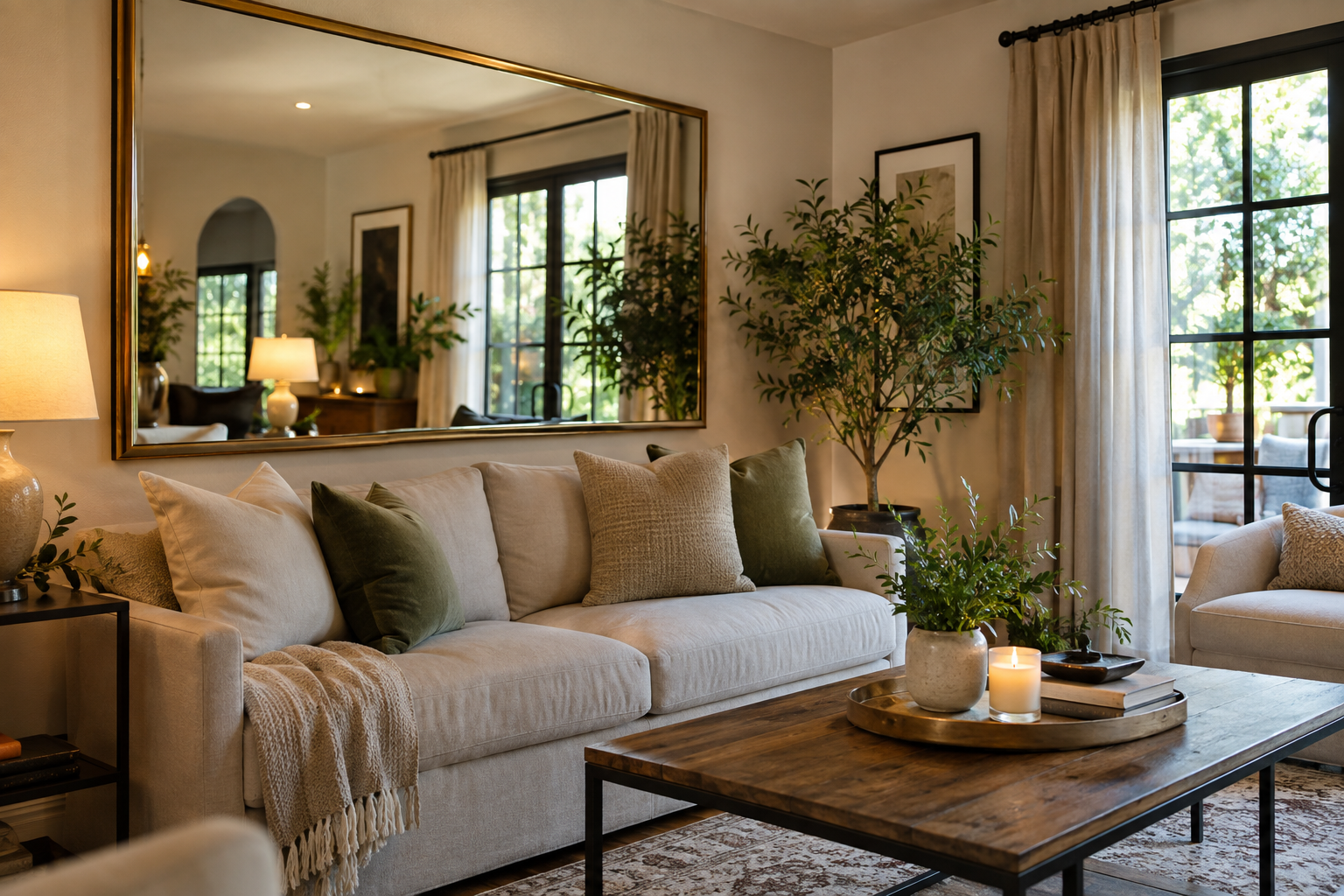
For example, imagine a small living room with a plain wall behind the sofa. Placing a large rectangular mirror on that wall can visually extend the room.
The same idea works well in a small bedroom, dining room, or entrance area.
A full length mirror can also be useful in narrow rooms because its vertical shape draws the eyes upward and makes the wall feel taller.
Place Mirrors Near Natural Light
Light has a major influence on how a room feels.
Rooms with plenty of natural light usually appear more welcoming, spacious, and comfortable. If your room has a window but still feels dark, a mirror can help distribute the available light.
Try placing a mirror near or across from a window.
When sunlight enters the room, the mirror reflects some of it back into the space. This can create a brighter atmosphere without adding extra lamps.
However, the exact angle matters.
Before permanently fixing the mirror to the wall, try holding or placing it in different positions during daylight. Look at how the sunlight changes throughout the day.
The goal is to reflect soft natural light into the room rather than producing uncomfortable glare.
Think Carefully About What the Mirror Reflects
This is one of the most important rules of decorating with mirrors.
A mirror doubles whatever it reflects visually.
If it reflects a beautiful plant, artwork, garden view, stylish lamp, or attractive furniture arrangement, the room can feel more interesting.
On the other hand, if it reflects clutter, cables, storage boxes, or an untidy corner, it may make the room look even more crowded.
Before hanging a mirror, stand where the mirror will be placed and imagine what will appear in its reflection.
Ideally, the reflection should show something pleasant.
A mirror facing a beautiful window can bring an outdoor view into the room. A mirror reflecting indoor plants can make the room feel greener and more relaxing.
In a dining room, a mirror may reflect an attractive table setting or decorative light fixture.
The reflection should feel intentional rather than accidental.
Use Mirrors to Brighten Dark Corners
Many rooms have areas that receive less light than others.
A corner behind furniture, a hallway, or a wall far from the window may feel darker. A mirror can sometimes help improve these areas.
Place a mirror where it can catch light from a nearby lamp or window.
Even a medium sized mirror can spread brightness and make the corner feel less closed.
You can also place a decorative lamp beside a mirror. The reflection increases the visual presence of the light and creates a warm atmosphere in the evening.
This works especially well with table lamps, wall lights, and soft ceiling lights.
Choose the Right Mirror Size
Mirror size has a strong effect on the final appearance of a room.
A mirror that is too small may look lost on a large wall. A mirror that is too large may dominate the room if the surrounding furniture is delicate.
Try to match the size of the mirror with the size of the wall and nearby furniture.
For example, if you are placing a mirror above a console table, choose one that feels visually connected to the table.
A very small mirror above a wide console may appear unbalanced.
Similarly, when placing a mirror above a fireplace or cabinet, leave enough space around it so that the arrangement can breathe.
Large mirrors are ideal when you want to create a dramatic effect or make a room appear more spacious.
Smaller mirrors are better for decorative arrangements or compact areas.

Use a Full Length Mirror in the Bedroom
A full length mirror is both practical and decorative.
In the bedroom, it allows you to check your complete outfit while also making the room appear larger.
You can place one beside a wardrobe, near a dressing area, or against an empty wall.
A tall mirror leaning slightly against the wall can create a relaxed modern look, although it should always be secured safely, especially in homes with children or pets.
If floor space is limited, a wall mounted mirror or wardrobe mirror may be more suitable.
A full length mirror also creates vertical emphasis. This can make ceilings appear higher and give the room a more open feeling.
Decorate an Empty Wall With a Statement Mirror
Sometimes a wall feels empty, but adding another painting does not seem like the right choice.
A statement mirror can solve this problem.
A statement mirror is usually chosen not only for its reflective surface but also for its shape, frame, or design.
Round mirrors can soften rooms filled with straight furniture and rectangular shapes.
Arched mirrors can add elegance and architectural character.
Wood framed mirrors can create a warm and natural appearance.
Metal framed mirrors often work well in modern interiors.
The mirror should support the overall style of the room rather than compete with it.
Use Round Mirrors to Soften a Room
Most rooms contain many straight lines.
Walls, doors, windows, tables, cabinets, beds, and sofas are usually rectangular.
Because of this, introducing a round mirror can add visual contrast.
A circular mirror above a console, bathroom sink, fireplace, or sideboard can make the room feel softer.
It can also become an attractive focal point without making the wall feel heavy.
Round mirrors are especially useful in minimalist rooms where you want one simple decorative feature.
Create a Mirror Gallery Wall
If you enjoy decorative walls, you can create a gallery using several mirrors.
Instead of hanging photographs or paintings, use mirrors in different shapes and sizes.
For a calm appearance, choose mirrors with similar frames.
For a more creative look, combine different shapes while keeping one common feature, such as the same frame color or material.
Before drilling holes, arrange the mirrors on the floor first.
Move them around until the composition feels balanced.
You can also cut paper shapes in the size of each mirror and temporarily tape them to the wall. This makes it easier to test the arrangement before hanging anything.
A mirror gallery works especially well on stair walls, hallway walls, or above a long piece of furniture.
Use Mirrors in Narrow Hallways
Hallways often feel narrow because they have limited natural light and little visual space.
Mirrors can improve both problems.
A large mirror along one side of a hallway can visually increase its width.
Even a series of smaller mirrors can create interest and reduce the feeling of walking through a closed passage.
If the hallway has a window or doorway at one end, position the mirror where it can reflect some of that light.
This creates a brighter and more welcoming transition between rooms.
Place a Mirror Above a Console Table
A console table and mirror are a classic combination.
This arrangement works beautifully in an entrance, living room, hallway, or dining area.
The console provides a visual base while the mirror adds height and depth.
You can complete the arrangement with a lamp, vase, books, or indoor plant.
Try not to overcrowd the surface.
The mirror should remain the main visual feature.
A simple combination of one mirror, one lamp, and a decorative object can often look more elegant than a large collection of accessories.
Use Mirrors in the Dining Room
Mirrors can work very well in dining rooms because they reflect both light and decorative details.
A large mirror placed near the dining table can make the room feel more spacious, especially during evening gatherings.
It can also reflect pendant lights, candles, or other decorative lighting.
However, placement should be considered carefully.
Avoid angles that create uncomfortable reflections while people are seated.
The goal is to add depth and atmosphere without making diners feel distracted.
Improve a Living Room With a Mirror
The living room is one of the easiest places to experiment with mirrors.
You can place a large mirror above a sofa, fireplace, console, or sideboard.
Another option is to lean a large mirror against a wall in a spacious corner.
Think about the strongest decorative feature in your living room.
If you have a beautiful chandelier, artwork, indoor plant collection, or attractive window view, position the mirror so that it reflects that feature.
This makes the decoration appear more important and creates another visual layer in the room.
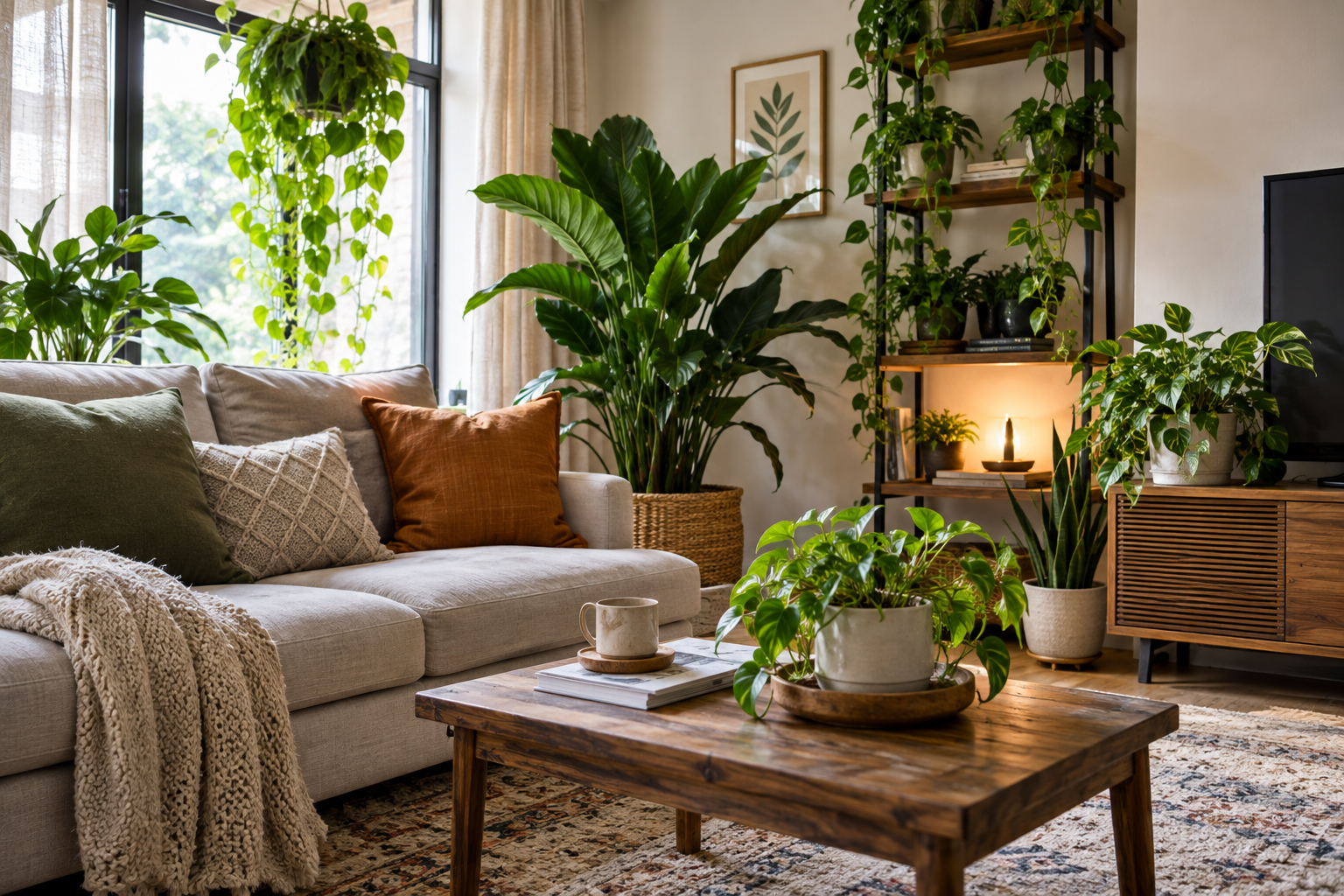
Use Mirrors With Indoor Plants
Mirrors and plants work surprisingly well together.
When a mirror reflects plants, it visually doubles the greenery.
Even two or three plants can appear like a larger indoor garden.
This can make a room feel fresher and more connected with nature.
Try placing a tall plant near a floor mirror or hanging mirror.
The leaves reflected in the glass add depth and natural texture.
This technique works particularly well in living rooms, bedrooms, and sunrooms.
Choose a Frame That Matches the Room
The mirror frame can change its entire character.
A simple thin frame may suit a contemporary room.
A wooden frame can bring warmth to Scandinavian, rustic, or traditional interiors.
Decorative frames can create a more classic or luxurious appearance.
Before buying a mirror, look at the other materials already present in the room.
If your furniture contains warm wood tones, a wooden mirror may create harmony.
If the room contains black metal furniture or lighting, a simple black frame can connect the different elements.
The aim is not to match everything perfectly, but to create visual relationships between objects.
Avoid Using Too Many Mirrors
Mirrors are useful, but more is not always better.
A room filled with reflective surfaces can feel confusing or overly busy.
In most spaces, one strong mirror is enough.
Larger rooms may support several mirrors, but they should have a reason for being there.
Ask yourself what each mirror is doing.
Is it reflecting light?
Is it making the space appear larger?
Is it highlighting a beautiful feature?
Is it filling an empty wall?
If a mirror does not improve the room in some way, it may not be necessary.
Keep Mirrors Clean
This sounds simple, but it makes a big difference.
Because mirrors reflect light, fingerprints, dust, and marks can become noticeable quickly.
A dirty mirror may make an otherwise attractive room feel less polished.
Clean mirrors regularly with a suitable glass cleaner and a soft cloth.
Pay special attention to mirrors near sinks, dining areas, and entrance doors where marks are more common.
A clean mirror reflects light more clearly and helps maintain the fresh appearance of the room.
Consider Safety When Hanging Large Mirrors
Large mirrors can be heavy, so safety should always be part of the design process.
Use suitable wall anchors and hanging hardware for the weight of the mirror.
The wall material also matters. Plaster, brick, concrete, and other wall surfaces may require different fixing methods.
If the mirror is very large or heavy, professional installation may be a sensible choice.
Floor mirrors should also be secured properly so that they cannot fall forward.
Good interior design should always combine appearance with safety.
Experiment Before Making the Placement Permanent
One of the best things about decorating with mirrors is that you can experiment.
Before hanging a mirror permanently, move it around the room.
Try different walls and observe how each position changes the space.
Look at the reflection during the morning, afternoon, and evening if possible.
A location that looks perfect during daylight may reflect an uncomfortable light source at night.
Taking a little time to test the position can help you find the most effective place.
Final Thoughts
Learning how to use mirrors to improve the look of a room does not require complicated design knowledge. Most of the process comes down to observing light, proportions, reflections, and the features already present in the space.
A mirror can make a small room feel larger, brighten areas with limited natural light, decorate an empty wall, and highlight attractive furniture or artwork.
The most important thing is to think about what the mirror will reflect.
Instead of hanging a mirror simply because there is an empty wall, consider how it can contribute to the entire room.
Choose a size that suits the wall, select a frame that works with the furniture, and place the mirror where it can reflect something worth seeing.
Small design decisions often produce surprisingly strong results.
Sometimes improving a room does not require buying new furniture or changing the walls. A carefully placed mirror may be enough to change how spacious, bright, and welcoming the entire room feels.