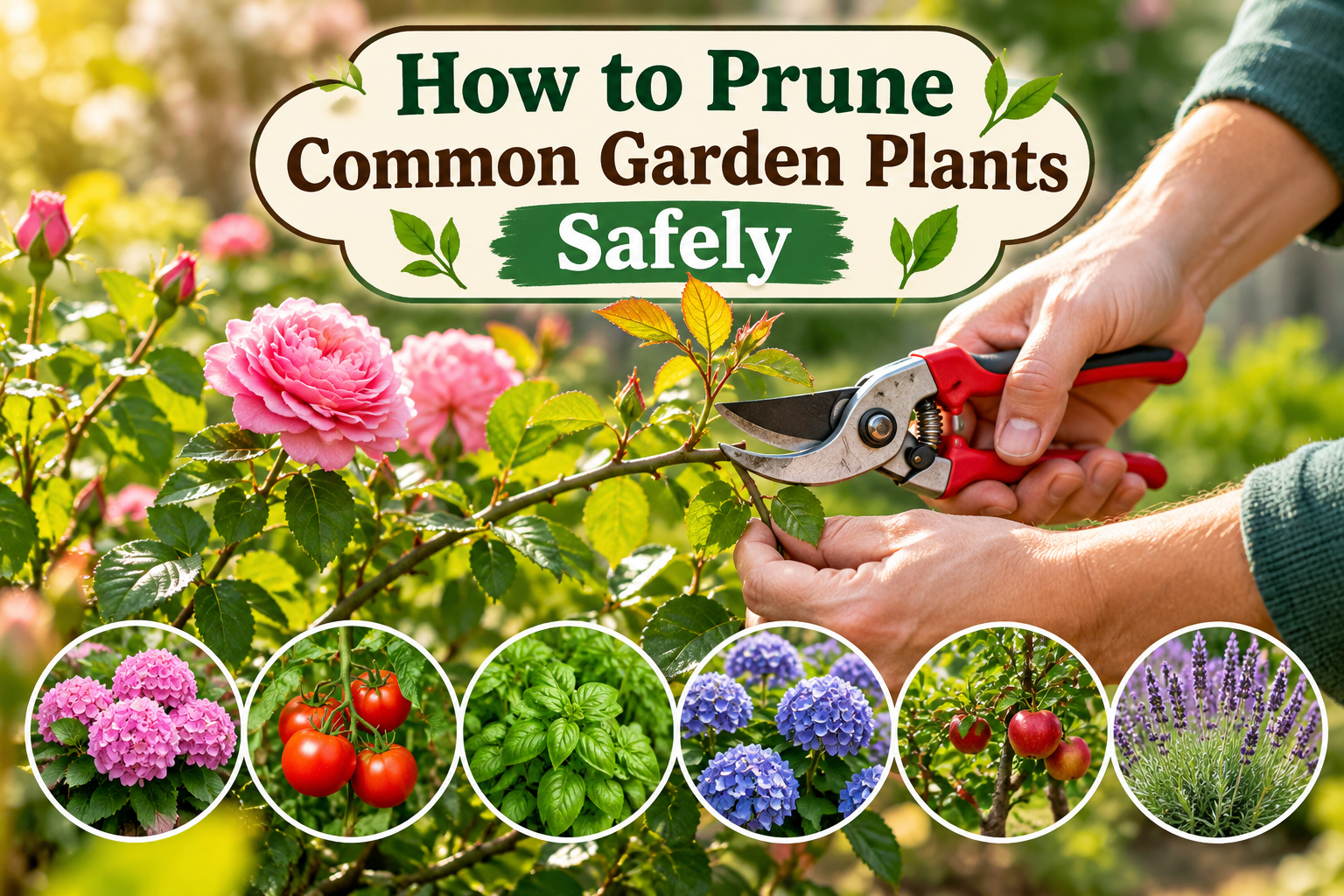
Pruning is one of the most useful skills a gardener can learn. It helps plants stay healthy, encourages better growth, improves their shape, and can even increase the number of flowers or fruits they produce. However, pruning must be done carefully. Cutting the wrong branch, pruning at the wrong time, or using dirty tools can damage a plant instead of helping it.
When I first started learning about pruning, I thought it simply meant cutting away extra branches. After reading gardening books and observing how different plants respond to trimming, I realized that good pruning is more about understanding the plant than removing growth. Every cut affects how a plant grows in the future.
Learning how to prune common garden plants safely can make gardening easier and more successful. The process does not need to be complicated. With clean tools, proper timing, and a few simple techniques, most home gardeners can prune their plants with confidence.
What Is Pruning?
Pruning means removing selected parts of a plant, such as branches, stems, leaves, flowers, or damaged growth.
Gardeners prune plants for several reasons. Sometimes the goal is to remove dead or diseased material. In other cases, pruning is used to improve the shape of a plant, control its size, increase air movement, or encourage new growth.
Pruning can also help sunlight reach the inner parts of a plant. When plants become too crowded, their leaves and branches may block light and trap moisture. This can create conditions where fungal diseases develop more easily.
Good pruning creates a healthier structure while allowing the plant to grow naturally.
Why Safe Pruning Matters
Plants are living organisms, and every pruning cut creates a small wound. Healthy plants can usually close these wounds naturally, but poor pruning can create unnecessary stress.
A badly placed cut may damage an important branch. Removing too much growth at one time can reduce the plant’s ability to make food through its leaves. Dirty pruning tools can also spread disease from one plant to another.
Safe pruning means removing only what is necessary and making clean cuts in the correct places.
The goal should always be to improve the plant rather than force it into an unnatural shape.
Use the Right Pruning Tools
Using the correct tools makes pruning easier and safer.
Hand pruning shears are useful for small stems and thin branches. They are suitable for flowers, herbs, young shrubs, and many garden plants.
Loppers have longer handles and are designed for thicker branches. The longer handles provide more cutting power.
A pruning saw is better for larger woody branches that are too thick for pruning shears or loppers.
Garden scissors can also be useful for delicate herbs, flowers, and soft plant growth.
Whatever tool you choose, the blade should be sharp. A sharp blade creates a smooth cut, while a dull blade may crush or tear plant tissue.
Keep Pruning Tools Clean
Clean tools are extremely important when pruning garden plants safely.
Plant diseases can sometimes remain on pruning blades. If you prune an infected plant and then immediately cut a healthy plant, disease may spread between them.
Before pruning, remove soil, sap, and plant material from the blades.
When working with plants that appear diseased, clean the tool before moving to another plant.
Keeping tools clean is a simple gardening habit that can prevent many problems.
Remove Dead Growth First
One of the safest places to begin pruning is with dead growth.
Dead branches no longer help the plant and can sometimes provide hiding places for pests or disease organisms.
Look carefully for branches that are dry, brittle, discolored, or completely without healthy buds.
Cut dead material back to healthy plant tissue.
Removing dead growth often improves the appearance of the plant immediately and makes it easier to see which other branches may need attention.
Remove Diseased or Damaged Branches
Branches damaged by wind, pests, disease, or accidental injury should also be inspected carefully.
A cracked or broken branch may continue tearing if it is left attached. Diseased branches may allow infection to spread into healthier areas of the plant.
Make the pruning cut slightly below the damaged area where healthy tissue begins.
If you are removing diseased material, do not leave it lying around healthy plants. Dispose of it properly instead of adding obviously infected material to ordinary garden compost.
Make Clean Cuts
A good pruning cut should be smooth and clean.
Avoid twisting or tearing branches with your hands. Torn plant tissue usually takes longer to heal.
For small branches, position the pruning blade carefully and make one firm cut.
When pruning near a bud, make the cut slightly above the bud rather than directly through it.
Choosing a healthy outward facing bud can encourage new growth to develop away from the center of the plant.
This helps create an open and balanced shape.

Avoid Cutting Too Close to the Main Stem
When removing a branch from a tree or woody shrub, avoid cutting directly into the main trunk.
Most branches have a slightly raised area where they connect to a larger stem. This area helps the plant close the wound after the branch is removed.
Cutting too close can damage the trunk.
On the other hand, leaving a very long branch stub is also not ideal.
The best cut usually removes the branch while leaving the natural connection area intact.
Do Not Prune Too Much at Once
One of the most common pruning mistakes is removing too much growth during a single session.
Leaves help plants produce energy. If too many healthy leaves and branches are removed, the plant may become stressed.
For most established plants, gradual pruning is safer than major cutting.
If a shrub has become very overgrown, consider improving its shape over more than one growing season instead of trying to completely reshape it in one day.
Moderate pruning usually gives the plant enough time to recover.
How to Prune Flowering Shrubs
Flowering shrubs need special attention because pruning at the wrong time may remove future flowers.
Some shrubs produce flowers on branches that grew during the previous season. These plants are usually best pruned after flowering.
Other shrubs produce flowers on new growth. These plants may benefit from pruning before the main growing period begins.
Before pruning a flowering shrub, it is useful to know whether the plant flowers on old growth or new growth.
If you are unsure, begin by removing only dead, damaged, or crowded branches.
This approach reduces the risk of accidentally cutting away flower buds.
How to Prune Roses Safely
Roses often respond well to careful pruning.
Start by removing dead, weak, or damaged stems. Next, remove branches that cross each other or grow toward the center of the plant.
An open center allows better air circulation and sunlight.
Make cuts above healthy outward facing buds.
Avoid leaving weak stems that are unlikely to support flowers properly.
Different types of roses may have slightly different pruning requirements, so gardeners should also consider the variety they are growing.
How to Prune Tomato Plants
Tomato pruning depends on the type of tomato plant.
Indeterminate tomato varieties continue growing and producing throughout the season. Gardeners sometimes remove small shoots that develop between the main stem and side branches. These shoots are commonly called suckers.
Removing some of these shoots can improve air movement and make the plant easier to manage.
However, excessive pruning may expose tomato fruits to strong sunlight and reduce the number of leaves available for food production.
Determinate tomato plants usually require less pruning because they naturally grow to a more limited size.
How to Prune Herbs
Many common herbs benefit from light and regular pruning.
Basil is a good example. Pinching or cutting the top growth above a pair of leaves encourages the plant to become bushier.
Mint also responds well to regular trimming. Removing growing tips can help prevent the plant from becoming long and untidy.
Rosemary and thyme can be trimmed lightly to maintain their shape, but gardeners should avoid cutting deeply into old woody growth unless they know the plant can recover from it.
Frequent light harvesting is often enough to keep culinary herbs productive and compact.
How to Prune Fruit Trees
Fruit trees require more careful planning than small garden plants.
The main goals are usually to remove dead or damaged branches, improve the structure of the tree, allow light into the canopy, and support fruit production.
Branches that rub against each other should be considered for removal.
Branches growing directly toward the center may also create unnecessary crowding.
For large trees, high branches, or heavy limbs, professional help may be safer.
Working from a ladder while handling cutting tools can be dangerous. Garden safety should always be more important than completing the pruning yourself.
Choose the Right Time to Prune
Timing can affect how well a plant responds to pruning.
Many deciduous trees and shrubs are pruned during their dormant period because their branch structure is easier to see.
Spring flowering shrubs may require pruning after flowering so that next year’s buds are not accidentally removed.
Fast growing herbs and soft garden plants may be trimmed throughout the growing season.
Avoid major pruning when plants are already suffering from extreme heat, drought, or other environmental stress unless damaged or diseased branches need immediate removal.
Prune for Better Air Circulation
Crowded plants often have poor air circulation.
When leaves remain wet for long periods, fungal diseases may become more likely.
Removing selected crowded branches can allow air to move through the plant more easily.
This is especially useful for roses, tomatoes, and dense shrubs.
However, the goal is not to create an empty plant. Remove only enough growth to reduce crowding while keeping the plant’s natural structure.
Prune for Shape Without Overdoing It
Pruning can improve the appearance of garden plants, but plants should not always be forced into perfect shapes.
Natural growth often looks better and requires less maintenance.
Before cutting, step back and look at the whole plant.
Decide which branches actually disturb the shape.
Remove them gradually and check the plant again after several cuts.
This simple habit can prevent excessive pruning.
Common Pruning Mistakes to Avoid
Several mistakes can reduce the benefits of pruning.
Using dull tools can crush stems instead of cutting them cleanly.
Removing too much healthy growth can weaken plants.
Pruning flowering plants at the wrong time may reduce flowering.
Cutting large branches without proper technique can damage the trunk.
Ignoring tool cleanliness may spread plant diseases.
Another mistake is pruning simply because a plant looks large. Healthy mature plants often need less pruning than people expect.
Pruning should always have a clear purpose.
Watch the Plant After Pruning
After pruning, continue observing the plant.
Most healthy plants gradually produce new growth around properly pruned areas.
Make sure the plant receives appropriate water and normal care. Avoid trying to force recovery with excessive fertilizer.
New growth should appear naturally when growing conditions are suitable.
Observation is one of the best gardening skills because it helps you understand how each plant responds to pruning.
Final Thoughts
Learning how to prune common garden plants safely takes patience, but the basic principles are simple.
Use clean and sharp tools. Remove dead, diseased, damaged, or crowded growth first. Make clean cuts in suitable locations. Avoid removing too much of the plant at one time, and consider the natural growth and flowering pattern of each species.
Pruning should not be treated as aggressive cutting. It is a careful form of plant maintenance.
A well pruned plant should still look natural, healthy, and balanced.
As gardeners gain experience, they begin to recognize which branches improve a plant and which ones cause crowding or weakness. This understanding develops through observation as much as through reading.
The safest approach is usually to prune gradually and with a clear reason for every cut. When done correctly, pruning can help garden plants remain attractive, productive, and healthy for many growing seasons.