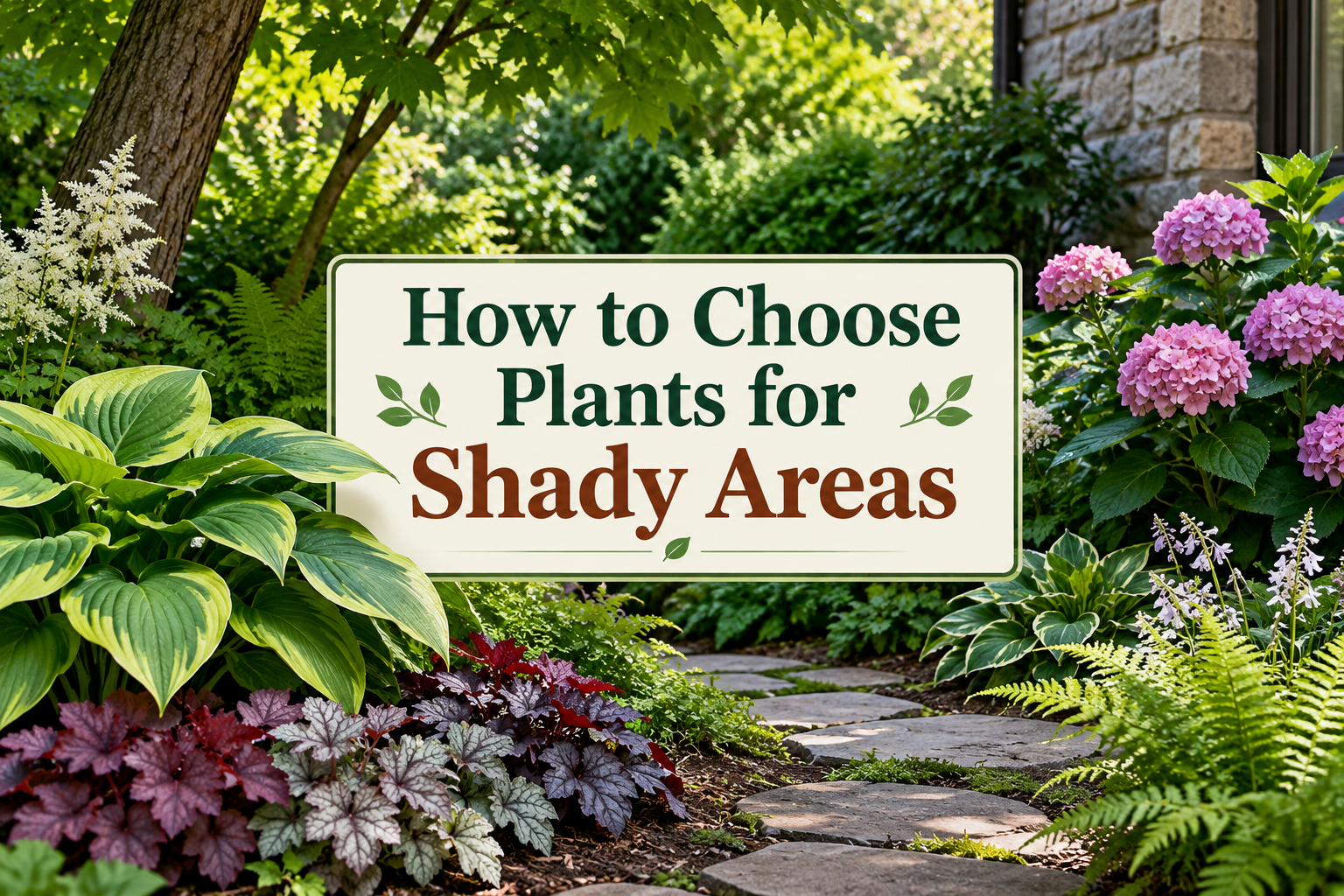
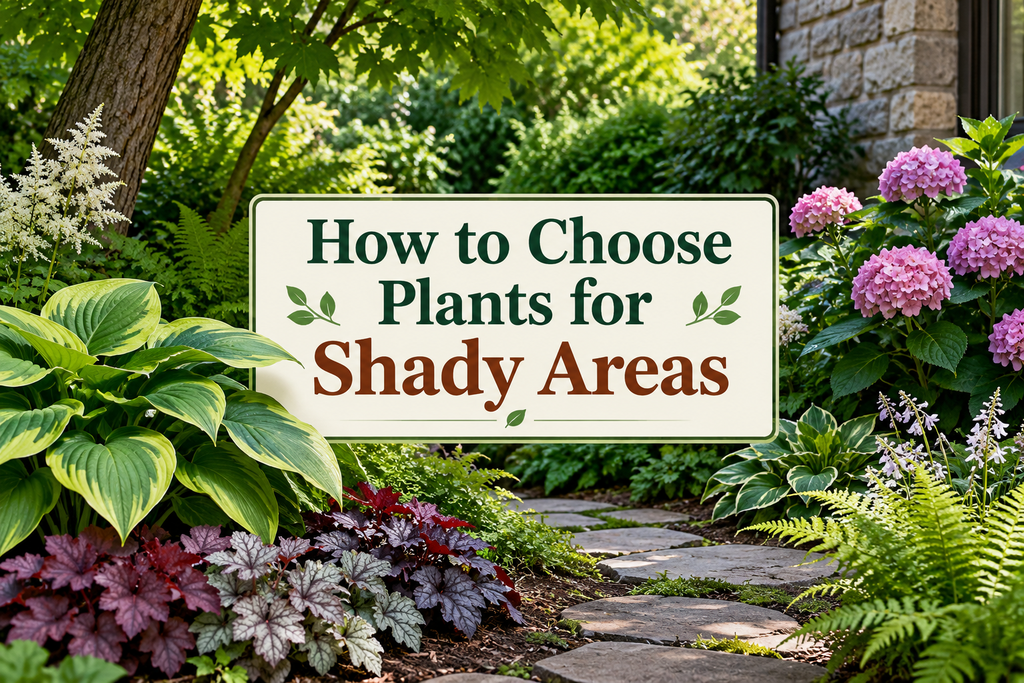
Choosing plants for shady areas can seem difficult at first, especially when many popular garden plants prefer bright sunlight. A corner that receives only a few hours of sun may look empty, dull, or difficult to manage. However, shade does not mean that nothing will grow there.
Many beautiful plants naturally grow under trees, beside walls, near buildings, and in woodland areas where sunlight is limited. The key is understanding the type of shade you have and then selecting plants that are comfortable in those conditions.
When I started learning about shade gardening, I noticed that one common mistake is choosing plants only because they look attractive in a nursery. A plant may look healthy when you buy it, but if its light requirements do not match your garden, it may slowly become weak.
A better approach is to first study the growing conditions of the area and then choose suitable plants. This simple method can save time, money, and effort.
Understand What Shade Really Means
Before choosing plants for shady areas, it is important to understand that not all shade is the same.
Some areas receive bright light but no direct sun. Other places may receive morning sunlight and remain shaded for the rest of the day. A space under a thick tree may stay dark almost all day.
Gardeners usually describe shade in a few simple ways.
Full shade means an area receives very little direct sunlight during the day.
Partial shade usually means an area receives around three to six hours of direct sunlight.
Light shade means sunlight reaches the area indirectly or passes through tree branches.
Deep shade refers to very dark areas, usually under dense trees, covered structures, or between buildings.
Knowing the difference helps you choose plants more accurately.
Observe the Area Before Buying Plants
One of the best things you can do is observe your garden for a full day.
Check the area in the morning, around midday, and again in the afternoon. Notice when sunlight reaches the ground and how long it stays there.
The amount of shade can also change with the seasons.
A place under a deciduous tree may be sunny during winter when the tree has no leaves. In summer, the same place may become heavily shaded.
Walls and buildings also create different shade patterns during the year because the angle of the sun changes.
Spending a little time observing the area can give you a much clearer idea of which plants will grow successfully.
Check the Soil Condition
Light is not the only factor that affects plants in shady areas.
Soil conditions can be just as important.
Some shady spaces stay damp because sunlight does not dry the soil quickly. Other shady areas can be surprisingly dry, especially under large trees where roots absorb much of the available water.
Take a small amount of soil in your hand and check how it feels.
If it stays wet for a long time after watering, you may have moist shade.
If the soil becomes dry quickly, you may have dry shade.
You should also check whether the soil is compacted, loose, sandy, or rich in organic matter.
Plants that enjoy moist woodland conditions may not survive in dry soil under a large tree. In the same way, plants that prefer well drained soil can struggle in constantly wet ground.
Choose Plants According to Light Requirements
When buying plants, read the plant label or reliable growing information carefully.
Look for words such as shade tolerant, partial shade, woodland plant, or suitable for indirect light.
Try not to force sun loving plants into dark places.
For example, many flowering plants need strong sunlight to produce large numbers of flowers. If they are planted in heavy shade, they may grow leaves but produce very few blooms.
Shade tolerant plants have adapted to use lower levels of light more efficiently.
These plants are usually a much better choice for areas with limited sunlight.
Consider Ferns for Shady Gardens
Ferns are among the most useful plants for shady areas.
They naturally grow in forests and woodland environments where sunlight is filtered through trees.
Their soft green leaves can add texture and movement to a garden.
Some ferns enjoy moist soil while others can tolerate relatively dry conditions once established.
Popular garden ferns include lady fern, Japanese painted fern, autumn fern, and maidenhair fern.
Before choosing a fern, check its moisture needs because different species prefer different conditions.
Ferns can look especially attractive beside paths, under trees, or near shaded walls.
Try Hostas for Attractive Foliage
Hostas are well known for their beautiful leaves.
They are often grown in shady gardens because many varieties perform well with limited sunlight.
Hosta leaves come in different sizes and shades of green, blue green, cream, and yellow.
Some varieties have large leaves that create a bold appearance, while others stay compact.
Hostas usually prefer fertile soil with reasonable moisture.
One thing to remember is that slugs and snails sometimes damage hosta leaves, especially in damp areas.
Regular garden inspection can help you notice problems before serious damage occurs.
Use Heuchera for Colorful Leaves
Flowers are not the only way to bring color into a shady garden.
Heuchera, sometimes called coral bells, is valued for its colorful foliage.
Depending on the variety, the leaves may be green, purple, bronze, silver, or reddish.
Many heucheras grow well in partial shade and can add color even when few flowers are present.
They usually prefer soil that drains well.
Heuchera can work nicely along garden borders or between larger shade plants.
Consider Astilbe for Moist Shade
Astilbe is a useful choice for shady places that also have moist soil.
It produces soft flower plumes that can appear in shades of pink, red, white, and purple.
The plant also has attractive divided foliage.
Astilbe generally performs best when the soil does not become completely dry.
For this reason, it may be a good option beside shaded paths, near water features, or in garden beds that receive regular watering.
Grow Hydrangeas in Suitable Shade
Some types of hydrangeas can perform well in partial shade.
They often prefer morning sun followed by afternoon shade, especially in warmer climates.
Hydrangeas are valued for their large clusters of flowers and strong garden presence.
However, they still need enough light to flower properly.
A very dark location may reduce flowering.
It is also important to check the needs of the specific hydrangea variety because different types can have different light and soil requirements.
Think About Ground Cover Plants
Shady areas often have bare soil where grass struggles to grow.
Ground cover plants can be a practical solution.
Instead of leaving the ground empty, you can use low growing shade tolerant plants to create a green carpet.
Examples include ajuga, pachysandra, sweet woodruff, and certain varieties of vinca.
Ground cover plants may also help reduce weeds by covering open soil.
However, some ground covers spread quickly, so it is important to choose varieties carefully and control their growth when necessary.
Use Native Plants When Possible
Native plants can be a very useful choice for shady gardens.
Plants that naturally grow in your local region are already adapted to the climate, rainfall, and seasonal conditions.
Many woodland native plants are naturally suited to shade.
They may also support local insects, butterflies, and other wildlife.
When choosing native plants, try to learn about their natural habitat.
A plant that grows beside streams may prefer moist soil, while one that grows in dry woodland may tolerate drought better.
Matching the plant to the correct conditions is still important.
Think About Plant Height
A well designed shade garden usually includes plants of different heights.
If every plant is the same size, the garden can look flat.
You can create more interest by combining taller shrubs, medium sized foliage plants, and low ground covers.
For example, a shade tolerant shrub can form the background.
Hostas or ferns can fill the middle area.
Smaller ground cover plants can grow near the front.
This creates a layered appearance similar to what you might see in a natural woodland.
Focus on Foliage, Not Only Flowers
One lesson I found useful when learning about shade gardening is that foliage often becomes more important than flowers.
In sunny gardens, flowering plants may provide strong color throughout the season.
In shady areas, flowering may be more limited.
This means leaf shape, color, and texture become important design features.
You can combine large hosta leaves with delicate fern fronds.
Add plants with silver, purple, or variegated foliage to create contrast.
Even without many flowers, a shade garden can still look rich and interesting.
Be Careful With Plants Under Trees
Planting under mature trees can be challenging.
Tree roots compete strongly for both water and nutrients.
Digging large planting holes can also damage important tree roots.
A safer approach is to use smaller plants and avoid cutting major roots.
You may also need to water new plants more regularly until they become established.
Adding a thin layer of organic mulch can help reduce moisture loss.
Do not pile mulch directly against the tree trunk because this can create moisture problems.
Improve the Soil With Organic Matter
Many shade plants grow naturally in woodland soil that contains decomposed leaves and organic material.
Adding compost can help improve similar garden conditions.
Compost can increase soil fertility, improve moisture retention, and help heavy soil drain more effectively.
You do not need to add excessive amounts.
A moderate layer mixed gently into the topsoil is usually enough.
You can also add leaf mold if it is available.
Leaf mold is especially useful in woodland style gardens because it improves soil structure and moisture retention.
Avoid Overwatering Shady Areas
Because shade reduces evaporation, soil may remain wet longer than expected.
This means shaded plants sometimes need less frequent watering than plants growing in full sun.
Before watering, check the soil with your finger.
If the top few centimeters are still moist, you may not need to water yet.
Constantly wet soil can cause root problems in some plants.
At the same time, do not assume that every shady area is moist.
Soil under large trees can dry very quickly because tree roots absorb water.
Always check the actual soil condition.
Choose Plants That Match Your Climate
A plant may tolerate shade but still be unsuitable for your local climate.
Temperature, humidity, rainfall, and winter conditions also affect plant growth.
Before buying any plant, check whether it can handle the temperatures in your region.
A plant that performs well in a cool climate may struggle in a very hot location.
Similarly, tropical shade plants may not survive cold winters outdoors.
Choosing plants that match both the light conditions and the local climate gives you a much better chance of success.
Start With a Few Plants
You do not need to fill the entire shady area at once.
Starting with a few plants allows you to see how they respond to the location.
Observe their growth for several months.
If they remain healthy and produce good new growth, you can gradually add more plants.
This approach also makes it easier to learn which types perform best in your garden.
Gardening often involves observation and adjustment.
Even experienced gardeners sometimes move plants when they discover that another location suits them better.
Keep the Design Simple
A shady area does not need dozens of different plant varieties.
In many cases, repeating a few reliable plants creates a more attractive and organized appearance.
For example, several ferns planted together can create a natural woodland effect.
A group of hostas can form a strong foliage display.
Ground cover plants can connect different sections of the garden.
Using fewer plant types can also make maintenance easier.
Common Mistakes to Avoid
One common mistake is choosing plants without checking how much sunlight the area receives.
Another mistake is assuming that all shade is moist.
Gardeners may also choose plants only for their flowers without considering foliage.
Planting too deeply under tree roots can create problems as well.
Overwatering is another frequent issue because shaded soil may dry slowly.
The best way to avoid these problems is to observe the location carefully and select plants based on actual growing conditions.
Final Thoughts
Learning how to choose plants for shady areas can completely change the way you see difficult parts of a garden.
Instead of thinking of shade as a problem, it can become an opportunity to grow plants with beautiful foliage, soft textures, and a calm woodland appearance.
Start by checking how much light the area receives.
Then study the soil, moisture level, and local climate.
Choose plants that naturally prefer those conditions rather than trying to make unsuitable plants survive.
Ferns, hostas, heucheras, astilbes, hydrangeas, native woodland plants, and shade tolerant ground covers can all be useful choices depending on the location.
The most important lesson is simple.
Choose plants for the conditions you already have.
When the plant and the location match, gardening becomes easier, plants remain healthier, and even the shadiest corner can become one of the most attractive parts of your garden.