Watering is one of the first skills every new gardener needs to learn. It sounds simple because plants need water to survive, but good watering is not only about pouring water on the soil. The amount of water, the timing, the method, the type of plant, and even the condition of the soil can all affect how well a garden grows.
When I started learning more about gardening, I realized that many plant problems are linked to watering mistakes. Some plants receive too little water and become weak, while others receive too much and develop root problems. The good news is that beginner gardeners do not need complicated equipment or advanced knowledge. A few simple watering methods can make a big difference.
This guide explains simple watering methods for beginner gardeners in a practical and easy to understand way. The goal is to help you water plants properly, reduce waste, and create healthier growing conditions.
Why Proper Watering Matters in Gardening
Water plays an important role in almost every part of plant growth. Plants use water to move nutrients from the soil to their roots, stems, and leaves. Water also helps plants remain firm and supports photosynthesis.
When plants do not receive enough water, the leaves may start to droop, growth can slow down, and flowers may fall early. If the soil stays too wet for long periods, roots may struggle to get enough oxygen.
This is why proper watering is about balance.
Beginner gardeners often make the mistake of watering on a fixed schedule without checking the soil. A better approach is to observe the plant and the soil before watering.
Check the Soil Before Watering
One of the simplest watering methods for beginner gardeners is also one of the most effective. Check the soil with your finger before adding water.
Push your finger about one or two inches into the soil. If the soil feels dry at that depth, the plant may need water. If it still feels moist, wait a little longer.
This method is especially useful for pots, containers, flower beds, and small vegetable gardens.
The top layer of soil can look dry even when there is enough moisture below the surface. Checking deeper helps you avoid unnecessary watering.
Over time, you will become familiar with how quickly different parts of your garden dry out.
Water Slowly and Deeply
Light watering may wet only the surface of the soil. This can encourage roots to stay near the surface instead of growing deeper.
A better method is to water slowly and allow the moisture to reach deeper into the soil.
Deep watering encourages stronger root growth. Plants with deeper roots are often better able to handle short dry periods because they can reach moisture stored lower in the soil.
For garden beds, water slowly until the soil is moist several inches below the surface.
You do not need to flood the area. The aim is to give the soil enough time to absorb the water.
Use a Watering Can for Small Gardens
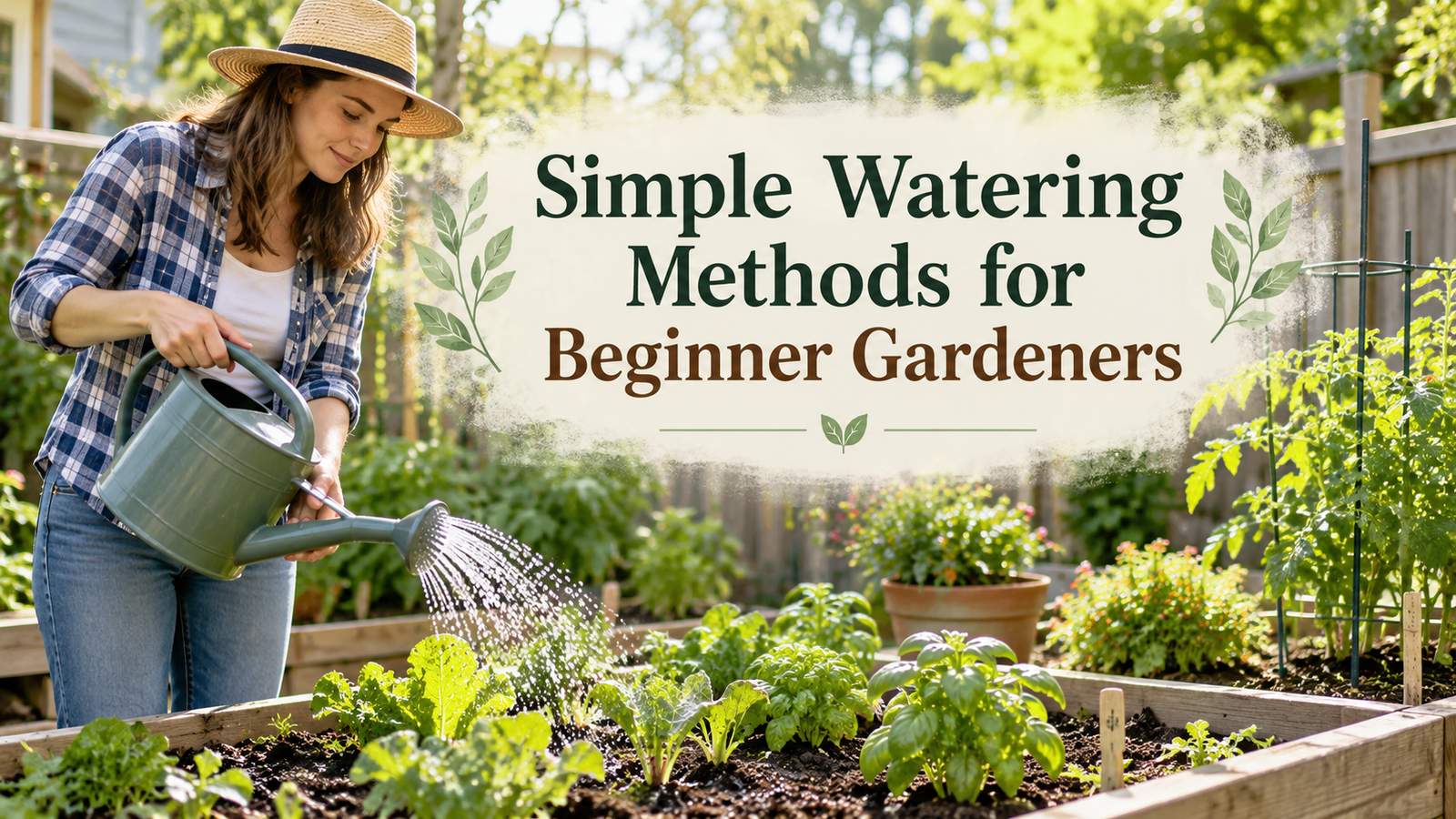
A watering can is one of the easiest tools for a beginner gardener.
It works well for container plants, seedlings, herbs, flowers, and small garden beds. A watering can gives you good control over the amount and direction of the water.
Choose a watering can with a removable rose or sprinkler head. The small holes create a soft flow of water that is useful for young plants and seedlings.
Without the rose, the stronger stream can be used near the base of larger plants.
When using a watering can, try to pour water directly onto the soil rather than over the leaves.
This helps the water reach the roots where it is needed most.
Water at the Base of the Plant
Plants absorb most of their water through their roots. Because of this, watering directly around the base of the plant is usually more useful than spraying water over the leaves.
Place the watering can or hose close to the soil and allow the water to soak into the root area.
This method also keeps the leaves drier.
Wet leaves are not always a problem, especially after natural rainfall, but frequently soaking foliage can create conditions where some plant diseases develop more easily.
For vegetables such as tomatoes, peppers, cucumbers, and beans, watering near the soil is generally a simple and practical approach.
Use a Garden Hose With a Gentle Nozzle
For larger gardens, a garden hose can save time.
However, strong water pressure can damage delicate plants and disturb the soil around roots. A gentle nozzle gives better control.
Select a soft shower setting if your nozzle has several options.
Move slowly around the garden and direct the water toward the base of each plant.
Avoid using a powerful jet setting unless you are cleaning paths or equipment. Strong water can wash away soil, expose roots, and damage seedlings.
For beginner gardeners, gentle water flow is usually the safest choice.
Try a Soaker Hose
A soaker hose is another simple watering method for home gardens.
It looks similar to a regular hose, but small openings along its surface allow water to slowly seep into the soil.
You can place a soaker hose around vegetables, shrubs, flower beds, and other garden areas.
The main advantage is that water goes directly into the soil with less water being sprayed into the air.
This can reduce waste and provide slow, steady moisture.
Covering the soaker hose with a light layer of mulch can also help reduce evaporation.
Use Drip Watering for Regular Garden Beds
Drip watering systems may sound complicated, but basic versions can be very simple.
A drip system uses small tubes or emitters to release water close to individual plants.
This method is useful for vegetable beds, rows of plants, pots, and larger home gardens.
Drip watering is popular because it delivers water slowly and directly to the root zone.
For beginners, a simple ready made drip kit can be easier to use than building a complete system from separate parts.
Once installed correctly, it can save time and make watering more consistent.
Water in the Morning When Possible
The time of day can affect how efficiently plants use water.
Early morning is often a good time to water because temperatures are usually lower and evaporation is slower.
The soil has time to absorb water before the warmer part of the day.
Morning watering also gives any moisture on the leaves time to dry.
If morning watering is not possible, late afternoon can also work, but try to avoid keeping leaves wet for long periods overnight.
The most important thing is to give the soil enough water when the plants actually need it.
Avoid Watering Too Frequently
Many beginners worry that plants will dry out quickly, so they water every day.
Some plants may need daily watering in hot weather, especially small pots, but many garden plants do not.
Frequent shallow watering can keep the surface damp while the deeper soil remains dry.
Instead of following a strict daily routine, check the soil.
Water when needed and water properly.
The correct frequency depends on several factors, including plant type, temperature, rainfall, container size, soil type, and sunlight.
Pay Attention to Container Plants
Container plants often dry out faster than plants growing directly in the ground.
This happens because pots contain a limited amount of soil.
Small containers can dry especially quickly during warm weather.
Check container soil regularly by touching the surface and testing the soil slightly deeper.
When you water a pot, continue slowly until a small amount of water starts to come out of the drainage holes.
This helps make sure that the entire root area receives moisture.
Always use pots with proper drainage holes. Water should be able to leave the container instead of collecting around the roots.
Understand Different Soil Types
Soil type affects watering.
Sandy soil drains quickly and may need more frequent watering.
Clay soil holds water for longer and may need less frequent watering.
Loamy soil usually offers a good balance between drainage and moisture retention.
You do not need to become a soil expert immediately, but you should observe how fast your garden soil dries after watering.
If water disappears very quickly, your soil may drain rapidly.
If the soil stays wet and sticky for a long time, it may hold too much moisture.
Adding organic matter such as compost can gradually improve many garden soils.
Use Mulch to Hold Moisture
Mulch is one of the simplest ways to help soil hold water for longer.
You can place a layer of organic material around plants. Common choices include dry leaves, straw, bark, compost, or grass clippings that have been allowed to dry.
Mulch helps reduce evaporation by protecting the soil from direct sunlight.
It can also reduce weed growth.
Leave a small space around the main stem of the plant instead of piling mulch directly against it.
A moderate layer is usually enough for a small home garden.
Watch the Weather
Garden watering should change with the weather.
After heavy rain, your plants may not need extra watering for several days.
During very hot or windy weather, soil can dry more quickly.
Weather observation can help you avoid both overwatering and underwatering.
You do not need special technology. Simply pay attention to recent rainfall, temperature, and how the soil feels.
If rain is expected soon and the soil is already slightly moist, you may be able to delay watering.
Learn the Signs of Underwatering
Plants can give useful clues when they need more water.
Common signs include drooping leaves, dry soil, slow growth, dry leaf edges, and flowers that fade quickly.
However, drooping does not always mean a plant needs water.
Some plants temporarily droop during the hottest part of the day and recover later.
Always check the soil before adding water.
If the soil is dry below the surface, watering may be needed.
Learn the Signs of Overwatering
Too much water can also cause problems.
Common signs can include yellow leaves, constantly wet soil, slow growth, soft stems, and unpleasant smells from the soil.
Roots need both moisture and air.
When soil remains completely saturated for too long, air spaces can disappear.
The easiest way to avoid overwatering is to check the soil and make sure containers and garden beds have reasonable drainage.
Water New Plants More Carefully
Newly planted flowers, vegetables, shrubs, and young trees often need more attention than established plants.
Their roots have not yet spread widely through the soil.
During the first days or weeks after planting, check the soil around them more often.
Keep the root area evenly moist, but do not keep it constantly soaked.
As the plant becomes established, you can usually water less often and more deeply.
Be Gentle With Seedlings
Seedlings have small and delicate root systems.
A strong stream of water can wash them out of the soil.
Use a watering can with a fine rose, a gentle spray bottle for very small seed trays, or a soft hose setting.
Keep the soil lightly moist while seeds are germinating.
Once seedlings become stronger and develop more roots, you can gradually begin watering more deeply.
Group Plants With Similar Water Needs
A useful gardening habit is to place plants with similar water needs close together.
For example, plants that prefer moist soil can be grown in one area, while drought tolerant plants can be placed in another.
This makes watering easier because you do not need to treat every plant differently in the same small space.
It also reduces the risk of giving too much water to plants that prefer drier soil.
Keep a Simple Watering Routine
A garden does not need a complicated watering schedule.
A simple routine can work well.
Walk around the garden in the morning. Check the soil in a few places. Look at the leaves. Water the plants that need it and leave the others alone.
This daily observation can teach you more about your garden than following a fixed schedule.
After a few weeks, you will begin to notice patterns.
You may discover that one sunny corner dries quickly while another shaded area stays moist for longer.
Common Watering Mistakes Beginner Gardeners Should Avoid
One common mistake is watering only the surface of the soil.
Another is watering every plant the same way.
Some beginners also water automatically every day without checking the soil.
Using strong water pressure, allowing pots to stand in water, and ignoring rainfall can also create problems.
The easiest solution is to slow down and observe.
Check the soil, water near the roots, and allow the water to soak in properly.
Gardening becomes much easier when watering is based on actual plant needs.
Final Thoughts
Simple watering methods for beginner gardeners are mostly based on observation and consistency.
You do not need expensive equipment. A watering can, a gentle hose, or a basic soaker hose can be enough for many home gardens.
The most important habits are checking the soil before watering, watering slowly and deeply, directing water toward the roots, and adjusting your routine according to the weather and plant type.
With practice, you will learn how your soil behaves and how often different plants need water.
Good watering is not about giving plants as much water as possible. It is about giving them the right amount at the right time.
Once you understand that balance, watering becomes one of the easiest and most satisfying parts of gardening.