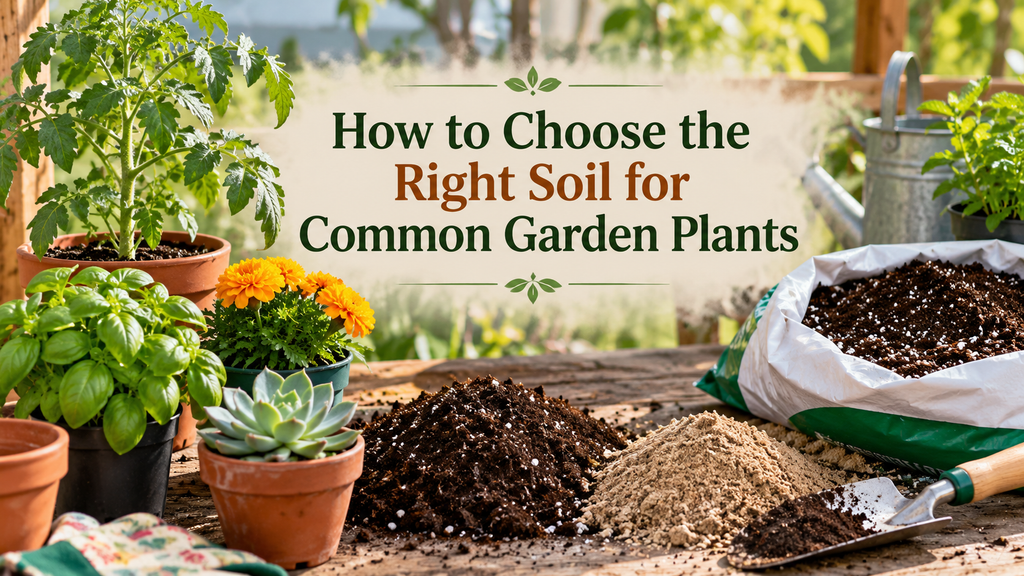
Choosing the right soil is one of the most important parts of successful gardening. A plant may receive enough sunlight and regular watering, but if the soil does not meet its needs, healthy growth can still become difficult. Soil provides plants with water, nutrients, oxygen, and physical support. It also creates the environment where roots grow and beneficial microorganisms live.
When I first started learning about soil, I thought garden soil was mostly the same everywhere. After reading gardening books and studying how different plants grow, I realized that soil can vary greatly. Some soil holds too much water, some dries very quickly, and some contains very little organic matter. Different plants also have different preferences.
Understanding a few basic soil principles can make gardening much easier. You do not need to become a soil scientist. You simply need to understand how soil behaves and how to match it with the plants you want to grow.
Why Choosing the Right Soil Matters
Healthy plants usually begin with healthy roots. Roots absorb water and nutrients from the soil, but they also need oxygen.
If soil becomes too compact, water and air cannot move easily through it. Roots may struggle to develop properly. On the other hand, soil that drains too quickly may not hold enough moisture for plants that require consistent watering.
The right soil creates a balance between drainage, moisture, nutrients, and air.
Good garden soil should normally allow excess water to drain while still keeping enough moisture around the roots. It should also contain organic matter that slowly provides nutrients and supports soil organisms.
When the soil conditions are suitable, plants often develop stronger roots and become better able to handle heat, temporary dryness, and other environmental stress.
Understand the Main Types of Garden Soil
Before choosing soil for common garden plants, it helps to understand the main soil types.
Sandy Soil
Sandy soil contains relatively large particles. It feels loose and often drains water quickly.
This type of soil is useful for plants that dislike standing water. However, nutrients and moisture can wash through sandy soil faster than gardeners would like.
Adding compost or other organic matter can improve its ability to hold moisture and nutrients.
Clay Soil
Clay soil contains very fine particles and can hold a large amount of water.
It is often rich in minerals, but drainage can become a problem. Heavy clay may become sticky when wet and hard when dry.
Adding compost regularly can improve the structure of clay soil. Organic matter helps create spaces where air and water can move more easily.
Silty Soil
Silty soil has smaller particles than sand but larger particles than clay.
It often feels soft and can hold moisture well. Silty soil can be productive, but it may become compact if it is handled too much when wet.
Adding organic matter helps maintain a loose and healthy structure.
Loamy Soil
Loamy soil contains a useful balance of sand, silt, and clay.
Many gardeners consider loam ideal because it can hold moisture while still allowing excess water to drain. It also usually supports good root development.
However, even loamy soil benefits from regular additions of compost.
Check the Drainage of Your Soil
Drainage is one of the first things I would check when deciding whether soil is suitable for a plant.
Some plants tolerate moist conditions, while others can quickly develop root problems when their soil remains wet for long periods.
You can perform a simple drainage test in your garden.
Dig a small hole and fill it with water. Allow the water to drain, then fill the hole again. Observe how quickly the water disappears.
If water remains for a very long time, your soil may have poor drainage. If it disappears almost immediately, the soil may be very sandy.
Improving drainage may involve adding organic matter, creating raised planting areas, or growing plants that naturally prefer those conditions.
Consider Soil pH
Soil pH describes how acidic or alkaline the soil is.
Most common garden plants grow well in soil that is slightly acidic to neutral. However, some plants prefer more acidic conditions, while others tolerate alkaline soil.
A soil testing kit can give you a basic idea of your soil pH.
Knowing your soil pH is useful because it affects how easily plants can absorb nutrients. Even when nutrients are present in the soil, plants may struggle to use them if the pH is unsuitable.
Instead of constantly adding fertilizers, it is sometimes better to understand the condition of the soil first.
Best Soil for Vegetable Plants
Vegetables usually perform best in fertile soil with good drainage and plenty of organic matter.
A productive vegetable garden often contains garden soil mixed with mature compost. Compost improves soil structure and slowly adds nutrients.
Vegetables such as tomatoes, peppers, cucumbers, beans, and eggplants need healthy root systems to support their growth.
Tomatoes especially prefer soil that drains well but does not become completely dry too quickly. Adding compost can help maintain this balance.
Leafy vegetables such as spinach and lettuce also benefit from soil that remains slightly moist while still allowing good drainage.
Before planting vegetables, I prefer thinking about soil quality rather than simply adding large amounts of fertilizer. Good soil creates the foundation for long term plant health.
Best Soil for Herbs
Many common herbs prefer soil with good drainage.
Mediterranean herbs such as rosemary, thyme, oregano, and lavender generally do not like constantly wet soil. Their roots perform better when excess water can escape.
Adding coarse material and organic matter to heavy soil can improve drainage.
Other herbs, including basil, parsley, mint, and coriander, usually appreciate slightly more moisture.
Mint is especially adaptable and can grow in many soil conditions, although fertile soil with regular moisture often encourages strong growth.
Because different herbs have different needs, it is helpful to avoid using the same watering routine for every herb.
Best Soil for Flowering Plants
Flowering plants generally need soil that supports both root growth and flower production.
Many common garden flowers grow well in loose, fertile soil enriched with compost.
Roses, for example, prefer rich soil with good drainage. They need enough moisture to support growth, but water should not remain around the roots for long periods.
Marigolds are more adaptable. They can grow in average garden soil as long as drainage is reasonable.
Petunias and many other seasonal flowers also prefer soil that drains well.
Before planting flowers, loosen the soil and mix in organic matter. This gives young roots a better environment to spread.
Best Soil for Succulents and Cacti
Succulents and cacti require very different soil from many vegetables and flowers.
These plants store water in their leaves, stems, or roots. Their biggest soil problem is often excessive moisture.
They need soil that drains quickly.
A suitable mixture usually contains materials that create more air spaces and allow water to leave the root area rapidly.
Ordinary garden soil alone may hold too much moisture for many succulents.
If growing succulents in containers, use a soil mixture designed for plants that require excellent drainage. The pot should also have drainage holes.
Healthy succulent roots should not remain in wet soil for extended periods.
Best Soil for Indoor Plants
Indoor plants depend completely on the soil inside their containers, so choosing a suitable potting mixture is important.
Garden soil is usually not ideal for indoor containers because it may become compact and may drain poorly inside a pot.
A good potting mixture is generally lighter and allows both air and water to move through it.
Different indoor plants have different requirements.
Peace lilies often prefer soil that holds some moisture. Snake plants prefer better drainage and can tolerate periods of dryness. Pothos plants usually grow well in loose potting soil that drains properly.
Understanding the natural growing habits of your indoor plant can help you choose the right soil.
Add Organic Matter to Improve Soil
One lesson that appears repeatedly in gardening books is the importance of organic matter.
Compost is one of the easiest ways to improve garden soil.
In sandy soil, compost helps hold moisture and nutrients.
In clay soil, compost improves structure and helps create spaces for air and water.
In average garden soil, compost supports beneficial organisms and provides nutrients as it slowly breaks down.
You do not need to completely replace your existing soil every year. Regularly improving it with good organic matter can gradually create healthier growing conditions.
Avoid Overusing Fertilizer
Fertilizer can support plant growth, but more fertilizer does not always mean healthier plants.
Excess fertilizer may damage roots and create unnecessary nutrient buildup in the soil.
Before adding fertilizer, consider whether the soil actually needs it.
Plants growing in soil rich in compost may already have access to many nutrients.
Watch your plants carefully. Weak growth, unusual leaf color, and poor flowering can sometimes indicate nutrient problems, but they can also be caused by incorrect watering, poor drainage, or unsuitable light.
Understanding the entire growing environment is more useful than immediately adding fertilizer whenever a plant looks unhealthy.
Improve Heavy Garden Soil Gradually
If your garden contains heavy clay soil, you do not always need to remove it.
Improving soil is usually a gradual process.
Adding compost each season can slowly improve its structure. Mulching the soil surface can also help protect it from extreme heat and reduce moisture loss.
Avoid working heavy soil when it is extremely wet because this can increase compaction.
Raised garden beds are another practical solution when natural soil drainage is very poor.
Choose Soil Based on the Plant
There is no single perfect soil for every garden plant.
The best approach is to understand what each plant prefers.
Plants from dry climates usually need faster drainage. Plants from moist environments often prefer soil that holds more water. Heavy feeding vegetables may need richer soil, while some herbs can grow well in less fertile conditions.
Before planting something new, learn about its natural growing environment. This information often gives useful clues about the soil it prefers.
Common Soil Mistakes to Avoid
One common mistake is planting everything in the same soil without considering different plant requirements.
Another mistake is using heavy garden soil inside containers. Container plants usually need a lighter mixture because their roots have limited space.
Overwatering is also closely connected with soil problems. Even good soil can become unhealthy when it remains constantly saturated.
Ignoring drainage holes in containers is another problem. Water must have somewhere to escape.
Finally, avoid assuming that fertilizer can repair every soil issue. Good drainage, proper soil structure, organic matter, and suitable pH are equally important.
How to Maintain Healthy Garden Soil
Healthy soil should be maintained rather than treated as something that never changes.
Plants remove nutrients as they grow. Rain and watering can also affect soil structure over time.
Adding compost regularly is one of the simplest ways to maintain soil quality.
You can also use natural mulch around plants. Mulch helps protect the soil surface, reduce water evaporation, and slowly add organic matter as it breaks down.
Avoid unnecessary digging because excessive disturbance can damage soil structure and the organisms living within it.
Observe how your soil changes throughout the year. Gardening becomes easier when you learn how your soil responds to rain, heat, watering, and different plants.
Final Thoughts
Learning how to choose the right soil for common garden plants can greatly improve your gardening results. Good soil gives roots the water, nutrients, oxygen, and support they need to grow properly.
Vegetables usually prefer fertile soil rich in organic matter. Many herbs need excellent drainage. Flowers generally perform well in loose and productive soil. Succulents and cacti require fast draining conditions, while indoor plants usually need lightweight potting mixtures.
The most useful thing I learned about gardening soil is that there is no universal mixture that is perfect for every plant. Successful gardening comes from understanding the needs of each plant and improving the soil to match those needs.
Start by checking your soil texture, drainage, moisture level, and pH. Add compost when necessary and pay attention to how plants respond.
Over time, working with soil becomes less confusing. You begin to recognize when soil is too wet, too compact, too dry, or lacking organic matter. Once you understand these signs, choosing the right soil becomes one of the simplest and most rewarding parts of gardening.
Focus Keyword: right soil for common garden plants
SEO Title: How to Choose the Right Soil for Common Garden Plants
Meta Description: Learn how to choose the right soil for common garden plants, including vegetables, herbs, flowers, indoor plants, succulents, and cacti. Discover simple tips for soil drainage, pH, compost, and healthy plant growth.