A small dining area can still feel comfortable, stylish, and welcoming when it is arranged with care. You do not need a large room, expensive furniture, or complicated interior design ideas to create a dining space that looks beautiful. In many homes, especially apartments and smaller houses, the dining area may be part of the kitchen, living room, or even a narrow corner. The key is to use the available space wisely.
When I think about decorating a small dining area, I prefer practical ideas that make the room feel open instead of crowded. Good furniture choices, proper lighting, simple colors, and careful decoration can completely change the atmosphere of a compact space.
The best approach is to focus on both beauty and function. Every item should have a purpose, and every design choice should help the space feel more comfortable.
Start by Understanding the Available Space
Before buying furniture or decorating the walls, study the dining area carefully.
Measure the width and length of the space. Also check how much room is available for people to walk around the table. This simple step can prevent many decorating mistakes.
A dining table may look perfect in a showroom but feel too large once it is placed inside a small room. It is better to choose furniture according to the actual size of the space.
Think about how many people normally use the dining area. If two or three people eat there most of the time, you may not need a large six seat table.
It is also useful to notice doors, windows, electrical outlets, and nearby furniture before deciding where the dining set should go.
Planning first usually saves both money and space.
Choose the Right Dining Table
The dining table is usually the most important piece of furniture in a small dining area.
Round tables are often a good choice because they take up less visual space and allow easier movement around the room. They also remove sharp corners, which can be helpful in narrow areas.
A small square table can work well in a compact corner.
Rectangular tables are useful when the dining area is long and narrow, but the table should be selected carefully so it does not block movement.
Another practical option is an extendable dining table. It can remain small during normal days and become larger when guests arrive.
Drop leaf tables are also useful for small homes because the sides can be folded down when they are not needed.
The goal is not to fit the largest possible table into the room. The goal is to choose a table that allows comfortable dining without making the space feel crowded.
Use Slim Dining Chairs
Large upholstered dining chairs can make a small area feel heavy.
Slim chairs with simple frames usually work better. Chairs with open backs are especially useful because they allow light to pass through and create a more spacious appearance.
You can also choose chairs that slide completely under the dining table.
This helps keep the walking area clear when the chairs are not being used.
Benches are another practical option.
A bench can fit along a wall and often provides seating for more than one person without taking up as much space as separate chairs.
If the bench includes hidden storage, it becomes even more useful.
Keep the Color Scheme Light
Light colors are often recommended for small spaces because they reflect more light and create an open feeling.
White, cream, beige, soft gray, pale blue, and light natural tones can make a small dining area feel brighter.
However, this does not mean that the entire room must be white.
You can add personality through cushions, artwork, table accessories, plants, and other small decorative details.
A soft neutral wall color combined with warm wooden furniture can create a calm and comfortable atmosphere.
If you prefer darker colors, use them in smaller amounts.
For example, one darker wall, a dark table, or black dining chairs can create contrast without making the entire room feel closed.
Make Good Use of Natural Light
Natural light can completely change the appearance of a small dining area.
If your dining space is near a window, try not to block the light with heavy furniture or thick curtains.
Light curtains, sheer fabrics, or simple blinds allow daylight to enter the room.
Place the dining table close enough to benefit from the natural light while still leaving enough walking space.
A bright dining area usually feels larger and more pleasant.
During the daytime, natural light can also make colors and textures look more attractive.
Add a Mirror to Create Depth
Mirrors are one of the most effective decorating tools for a small dining area.
A well placed mirror can reflect light and make the room appear deeper.
A large mirror on one wall can visually double the sense of space.
You can also use a collection of smaller mirrors if you prefer a more decorative look.
Try placing the mirror opposite a window or another light source. This can help brighten the room.
Keep the frame simple if the area is very small.
A heavy decorative frame may look beautiful, but a slim frame often feels more suitable in a compact room.
Use Vertical Wall Space
When floor space is limited, walls become extremely valuable.
Instead of placing large cabinets around the dining table, consider installing floating shelves.
Floating shelves can hold glasses, small plants, decorative objects, plates, or everyday dining items.
They provide storage without occupying floor space.
You can also use a tall narrow cabinet instead of a wide storage unit.
Vertical furniture uses height instead of width, which is often more practical in small rooms.
Wall mounted storage can also help keep the dining table clear and organized.
Keep the Dining Table Simple
A dining table can quickly become crowded when too many decorative items are placed on it.
In a small dining area, simple decoration usually looks better.
A small vase, bowl, candle holder, or plant may be enough.
You do not need a large centerpiece.
Choose something that can stay on the table without interfering with meals.
A simple fruit bowl can be both decorative and practical.
Seasonal flowers can also bring freshness to the dining area.
The important thing is to avoid creating visual clutter.
Choose the Right Lighting
Lighting is essential in any dining space, regardless of size.
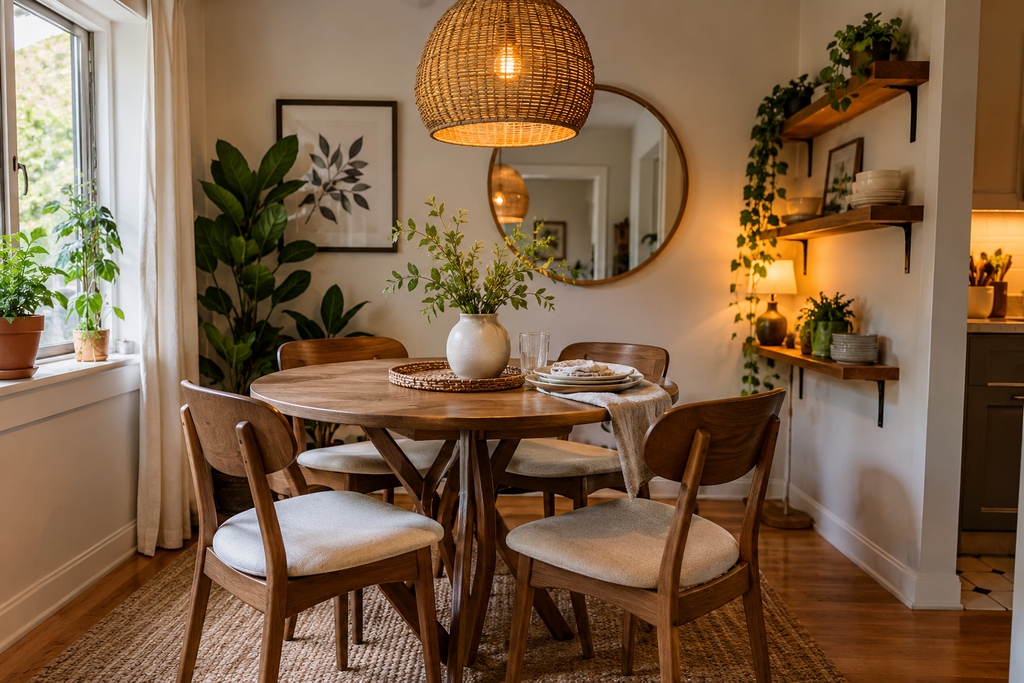
A pendant light above the dining table can create a clear visual focus.
In a small dining area, choose a light fixture that is proportional to the table.
An oversized chandelier may make the room feel crowded.
A simple pendant, small chandelier, or modern ceiling light often works better.
Warm light is usually more comfortable for dining because it creates a relaxed atmosphere.
If possible, use a dimmable light.
This allows you to have brighter lighting during meals and softer lighting in the evening.
Create a Clear Dining Zone
Many small homes have open layouts where the dining area shares space with the living room or kitchen.
In this situation, it is useful to create a visual dining zone.
A small rug under the dining table can help define the area.
Choose a rug that is large enough for the chairs to remain on it when they are pulled slightly away from the table.
You can also use lighting to define the dining space.
A pendant light directly above the table naturally separates the dining area from the rest of the room.
Wall art can also help create a clear focal point.
These simple techniques make the dining area feel intentional rather than temporary.
Use Multipurpose Furniture
Multipurpose furniture is extremely useful in small spaces.
A dining table can sometimes serve as a work desk.
A bench may include storage underneath.
A sideboard can hold dining items while also displaying decorative objects.
An extendable table can change size according to the situation.
The more functions one piece of furniture can provide, the less furniture you need.
This helps keep the dining area clean and open.
When shopping for furniture, think beyond appearance.
Ask yourself how many purposes the item can serve.
Avoid Too Much Furniture
One of the biggest mistakes in small dining areas is adding too much furniture.
A table, several chairs, a cabinet, a sideboard, a trolley, and multiple shelves may all seem useful individually, but together they can make the room uncomfortable.
Leave some empty space.
Empty space is an important part of interior design.
It gives the eyes a place to rest and makes the room feel less crowded.
Choose only the furniture that is necessary for your daily routine.
If an item is rarely used, consider storing it somewhere else.
Use Plants Carefully
Plants can make a dining area feel fresh and lively.
However, large plants may occupy too much floor space.
Small potted plants work better in compact rooms.
You can place them on shelves, window ledges, or the dining table.
Hanging plants are another useful option because they add greenery without using floor space.
Choose plants according to the amount of natural light available.
Healthy plants always look better than struggling ones.
Even one small green plant can add warmth to a simple dining area.
Decorate the Walls Without Overloading Them
Wall decoration can give personality to a dining area, but too many pieces can make a small space feel busy.
Choose one main artwork, a small gallery arrangement, or a decorative mirror.
You can also use framed photographs or simple prints.
Try to maintain balance.
A large blank wall may look unfinished, but a wall covered with too many small decorations can feel cluttered.
One carefully chosen piece often has more impact than many unrelated items.
Consider Built In Seating
Built in seating can be extremely useful when decorating a small dining area.
A bench built against the wall can reduce the amount of floor space needed for chairs.
It can also create a comfortable breakfast nook.
Built in benches can include drawers or storage compartments underneath.
This creates valuable hidden storage.
Add a few cushions to make the seating more comfortable.
Choose fabrics that are easy to clean, especially if children use the dining area regularly.
Keep the Floor Visible
The more visible floor space you have, the larger a room can appear.
Furniture with slim legs can help create this effect.
Instead of heavy furniture that sits directly on the floor, choose tables, chairs, and cabinets that show some space underneath.
This creates a lighter visual appearance.
Glass top dining tables can also make a small room feel more open because they do not create a strong visual block.
However, glass requires regular cleaning, so consider your lifestyle before choosing it.
Use Storage Baskets and Containers
Small dining areas often need creative storage.
Baskets can store tablecloths, napkins, placemats, or other dining accessories.
You can place them on open shelves or inside cabinets.
Decorative boxes can also hide smaller items.
The advantage of baskets and containers is that they keep everything organized while still looking attractive.
Choose storage that matches the overall style of the room.
Natural woven baskets work well in relaxed interiors, while simple boxes may suit modern spaces.
Select the Right Rug
A rug can make a dining area feel warmer and more complete.
However, the wrong rug can create problems.
The rug should be large enough for both the table and chairs.
If the rug is too small, chair legs may catch on the edges.
Choose a low pile rug that is easy to clean.
Dining spaces are naturally exposed to food and drink spills, so practical materials are important.
A simple pattern can also help hide small stains.
Avoid extremely dark or complicated patterns if the room is already visually busy.
Add Texture Instead of Clutter
A small dining room does not need many decorative objects to feel interesting.
Texture can create depth without taking up extra space.
Wood, woven fabrics, ceramic pieces, linen, and natural materials can all add character.
For example, a wooden dining table with linen napkins and a ceramic vase can feel warm and inviting.
Textured wall panels or subtle wallpaper may also add interest.
The goal is to create richness through materials rather than through large amounts of decoration.
Keep the Area Organized
Organization is especially important in a small dining space.
When the room is compact, even a small amount of clutter becomes noticeable.
Try to keep bags, papers, boxes, and unrelated household items away from the dining table.
Use drawers, cabinets, baskets, and shelves to give everything a proper place.
Create a simple habit of clearing the table after meals.
A clean table makes the entire room feel more spacious.
Organization is not only about appearance. It also makes daily life easier.
Use Consistent Design Elements
A small dining area usually looks better when the design feels connected.
Try to repeat similar materials, colors, or shapes.
For example, wooden dining chairs can connect visually with wooden kitchen cabinets.
Black metal lighting can match black chair legs.
A color used in wall art can appear again in cushions or table accessories.
Repeating small design details creates harmony.
This is especially useful in open plan homes where the dining area is visible from other rooms.
Avoid Blocking Walking Paths
Comfortable movement is more important than filling every empty corner.
There should be enough space around the dining table for people to sit down and stand up easily.
If chairs constantly hit walls or nearby furniture, the dining set may be too large for the area.
Consider moving the table closer to one wall when it is not in use.
You can pull it forward when additional seating is required.
Flexibility is very useful in small homes.
Make the Space Feel Personal
Practical design does not mean the dining area should feel plain.
Small personal details can make the space feel special.
You might display family photographs, handmade pottery, travel memories, books, or a favorite piece of artwork.
Choose items that have meaning rather than adding decoration simply to fill space.
A dining area is often where people gather, talk, and share meals.
Personal touches can make it feel warmer and more connected to the rest of the home.
Think About Daily Life
One of the most useful lessons in small space decorating is to design according to real life.
A dining room should not only look beautiful in photographs.
It should work comfortably every day.
If your family eats together regularly, choose furniture that is easy to clean and comfortable to sit on.
If the dining table is also used for homework or work, good lighting becomes even more important.
If guests visit frequently, an extendable table may be worth considering.
Your daily habits should guide your decorating decisions.
Final Thoughts
Decorating a small dining area is mostly about making thoughtful choices.
You do not need to fill every corner or follow every decorating trend. A comfortable table, suitable chairs, good lighting, simple storage, and a few carefully chosen decorative details can create a dining space that feels complete.
Light colors can make the room feel open. Mirrors can create depth. Slim furniture can improve movement. Wall mounted storage can save floor space. Multipurpose furniture can make the area more practical.
Most importantly, the dining area should feel comfortable for the people who use it.
A small room can still become one of the most enjoyable parts of a home when the layout is simple, the furniture is well chosen, and the decoration reflects your personal style.
With careful planning and a practical approach, even the smallest dining area can feel attractive, organized, and welcoming.