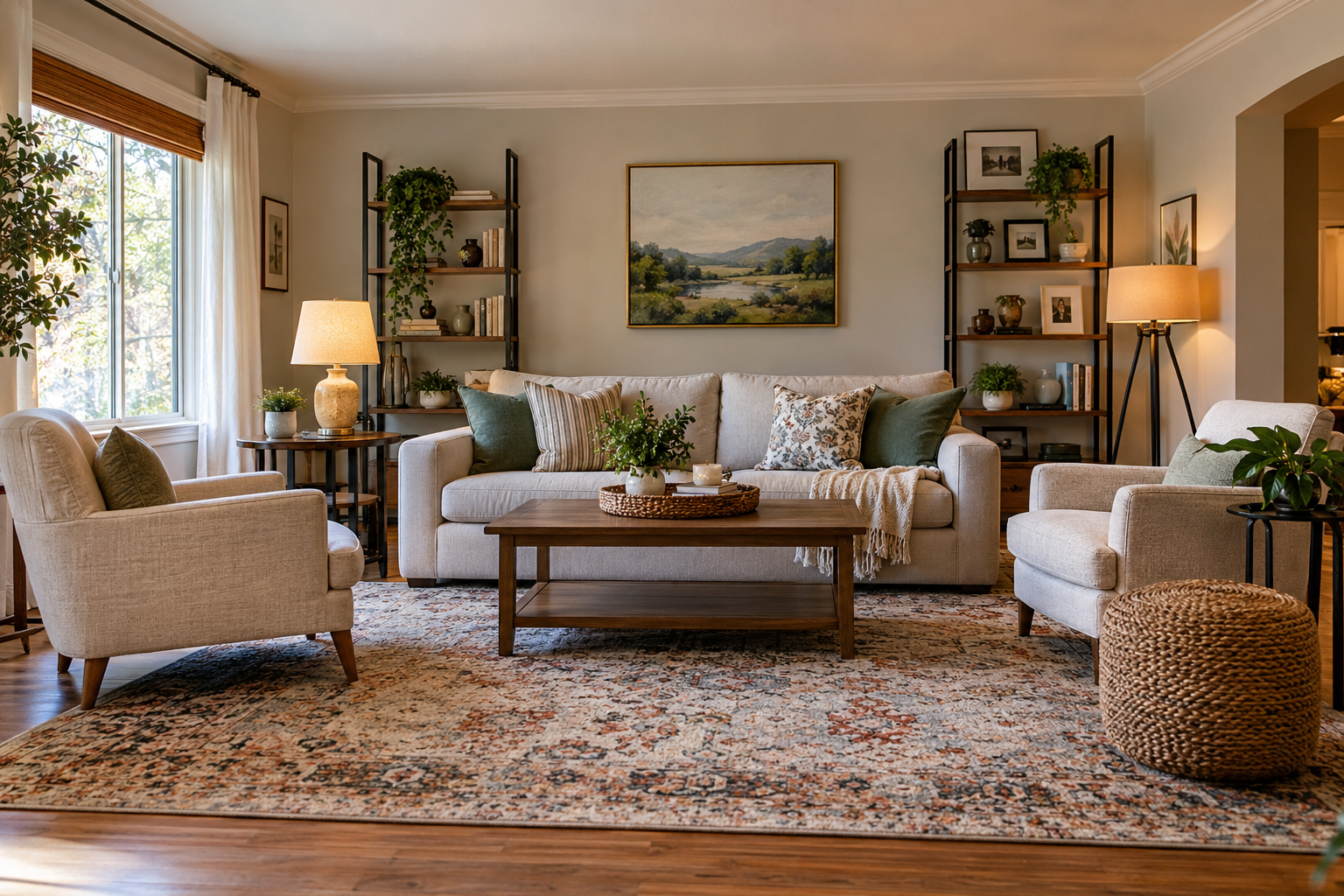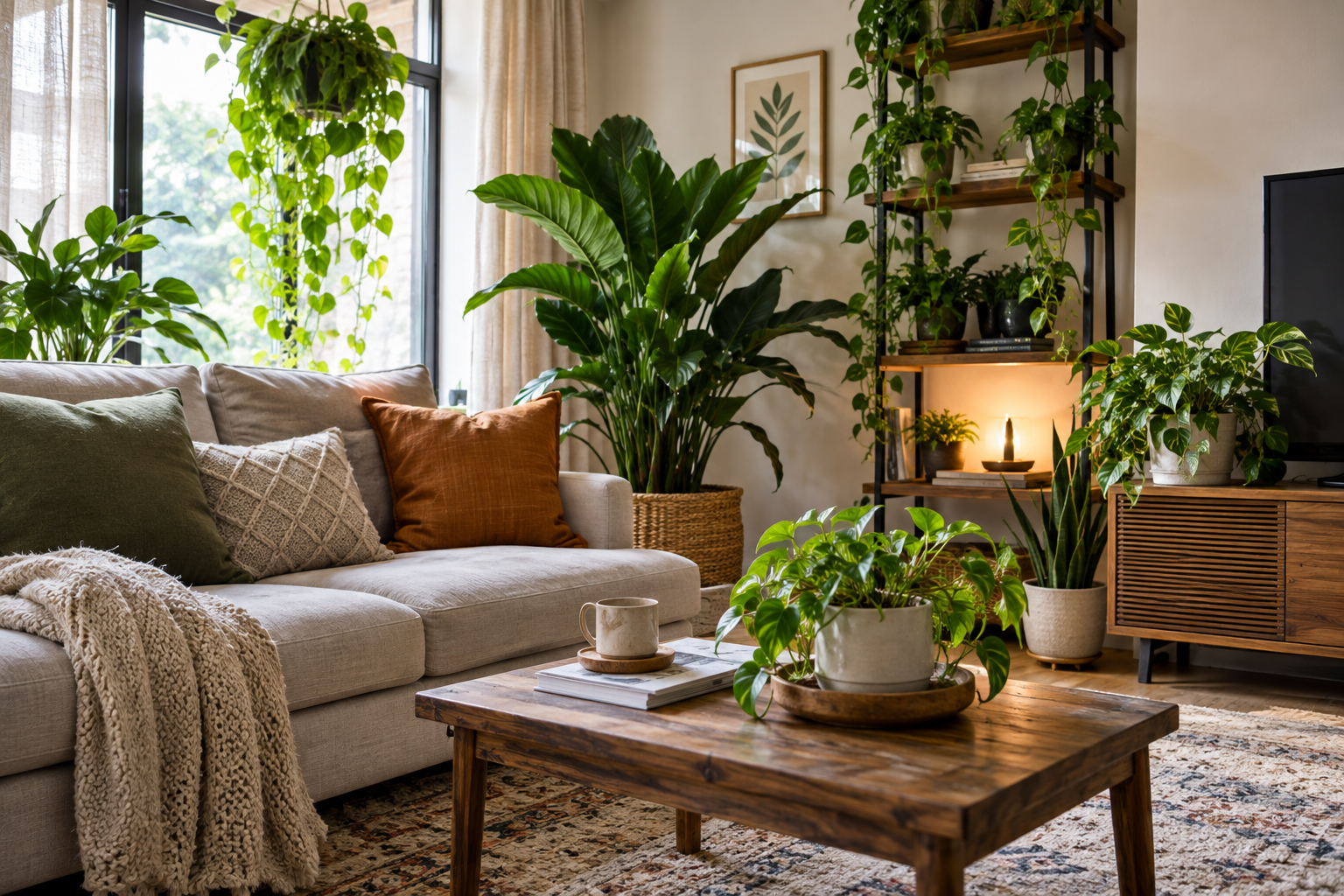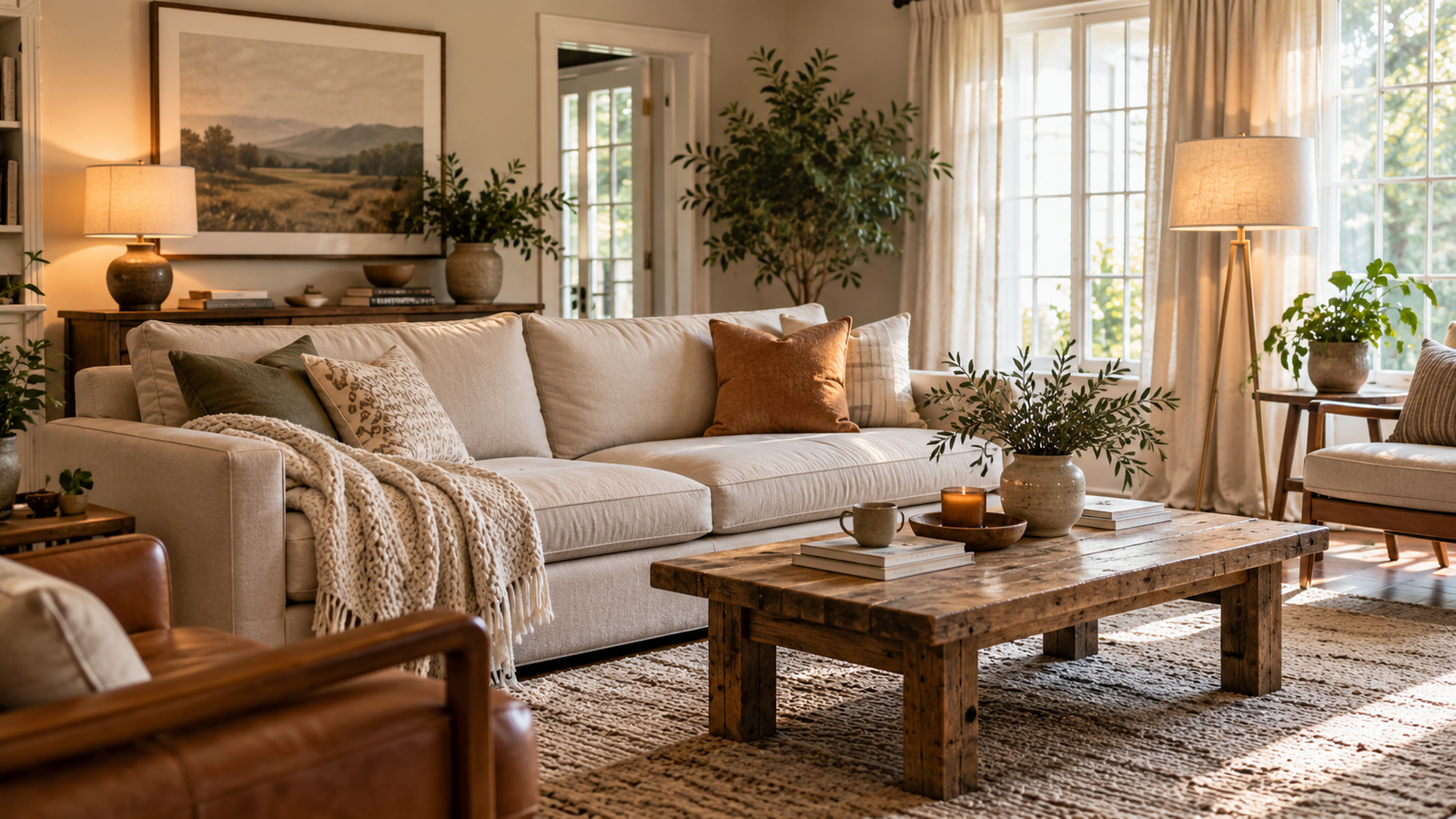
The living room is often the heart of a home. It is where family members sit together, guests are welcomed, conversations happen, and quiet moments are enjoyed. Because of this, the way a living room feels can be just as important as the way it looks.
A welcoming living room does not need expensive furniture or a complete renovation. Small changes in lighting, furniture placement, colors, textures, and decoration can make a noticeable difference. The goal is to create a space that feels comfortable, calm, practical, and inviting.
When I started reading about interior design and comfortable home spaces, I noticed that many experts focus on one simple idea. A room feels welcoming when people naturally want to stay in it. This means the room should not only look beautiful. It should also feel easy to use.
Here are some simple ways to make a living room feel more welcoming without making the space complicated or overly decorated.
Start With a Comfortable Furniture Layout
One of the easiest ways to make a living room feel more welcoming is to improve the furniture arrangement.
Furniture should encourage conversation rather than making people feel separated. If every chair and sofa is facing only the television, the room may feel less social.
Try arranging sofas and chairs so that people can comfortably see and talk to each other.
You do not always need to place furniture directly against the walls. In larger living rooms, bringing some furniture slightly closer together can create a more comfortable seating area.
A coffee table in the center can also help connect the seating arrangement. Side tables can provide convenient places for drinks, books, or lamps.
The main goal is to make movement easy while creating a natural gathering area.
Before buying new furniture, try changing the position of what you already have. Sometimes a small change in layout can completely improve the feeling of the room.
Use Warm and Comfortable Lighting
Lighting has a major effect on the atmosphere of a living room.
A room with only one bright ceiling light can sometimes feel harsh, especially in the evening. Using different sources of light can make the space feel softer and more relaxing.
Table lamps are useful near sofas, chairs, and side tables. Floor lamps can brighten darker corners while adding height to the room.
Warm light is usually more comfortable for living spaces than extremely bright or cool lighting.
During the daytime, natural light can make a living room feel fresh and open. Avoid covering windows with very heavy curtains unless privacy requires them.
Light curtains or blinds can allow daylight to enter while still providing some privacy.
In the evening, softer lighting creates a calm atmosphere that encourages people to relax.
A combination of ceiling lighting, lamps, and natural light can make the living room feel much more balanced.
Add Soft Textures
Texture plays an important role in making a living room feel comfortable.
Soft materials can make a space feel warmer and less formal.
Cushions are one of the easiest ways to introduce texture. You can combine cotton, linen, velvet, or knitted cushion covers depending on the style of your home.
A soft throw blanket placed over a sofa or chair can also make the room feel more inviting.
Rugs are another useful addition. A rug can visually connect the furniture and create a defined seating area.
In rooms with tile or wooden flooring, rugs can also make the space feel physically warmer.
You do not need many different textures. A few carefully chosen soft materials are often enough.
The idea is to balance harder surfaces such as tables, walls, and flooring with softer elements that make the room feel comfortable.
Choose Calm and Pleasant Colors
Color can strongly influence how people experience a room.
Neutral colors such as cream, beige, soft gray, warm white, and light brown are popular because they create a calm background.
However, a welcoming living room does not need to be completely neutral.
You can introduce color through cushions, artwork, curtains, rugs, or decorative objects.
Earthy colors such as olive green, terracotta, soft brown, muted blue, and warm yellow can work especially well in comfortable living spaces.
The important thing is to avoid using too many strong colors at the same time.
A limited color palette usually creates a more peaceful and organized appearance.
Think about how you want the room to feel. If you want a relaxing atmosphere, choose softer shades. If you want the room to feel energetic, use slightly brighter accents.
Include Personal Items
A living room becomes more welcoming when it reflects the people who live there.
Perfectly decorated rooms can sometimes feel like showrooms if they contain nothing personal.
Family photographs, books, handmade items, travel souvenirs, or meaningful artwork can make the room feel more natural.
You do not need to display everything you own.
Choose a few items that have personal value and place them where they can be seen without creating clutter.
A shelf with a few favorite books and photographs can feel more welcoming than a shelf filled with random decorations.
Personal items also create conversation. Guests often notice photographs, artwork, or objects that tell a story.
This gives the living room more character and makes the space feel unique.
Bring Plants Into the Room
Indoor plants can make a living room feel fresh and comfortable.
Greenery adds natural color and can soften areas that otherwise look empty.
A large plant can work well in a corner, while smaller plants can be placed on shelves, tables, or windowsills.
If you do not have much experience caring for plants, choose varieties that are known for being easy to maintain.
The size of the plants should match the size of the room. A very large plant may overwhelm a small living room, while tiny plants may disappear visually in a large space.
Plants also work well with many interior styles, including modern, traditional, Scandinavian, minimalist, and rustic designs.
If real plants are difficult to maintain, high quality artificial plants can still add some visual softness, although real plants usually provide a more natural effect.
Keep the Room Tidy Without Making It Empty
A welcoming living room should feel organized, but it should not feel completely empty.
Too much clutter can make a room feel stressful. At the same time, removing every object can make the space feel cold.
The best approach is to find a balance.
Use baskets, cabinets, drawers, or storage boxes to keep everyday items organized.
Remote controls, chargers, children’s toys, magazines, and other small items can quickly make a living room look messy.
Giving these items a specific storage place makes it easier to keep the room tidy.
Open surfaces such as coffee tables and side tables should have some empty space.
A few useful or decorative items are usually enough.
A clean but lived in room often feels more welcoming than a perfectly empty one.
Make the Entrance to the Living Room Attractive
The first impression of a living room begins before someone sits down.
Look at the room from the entrance.
What is the first thing you see?
If the entrance is blocked by furniture or clutter, the room may immediately feel smaller.
Try to keep the main walking path clear.
If possible, create a pleasant view from the doorway. This might include a comfortable sofa, artwork, a plant, or a nicely arranged coffee table.
The entrance should make people feel that they can easily walk into the room and find a place to sit.
This simple idea can make a surprisingly large difference.
Add Artwork Carefully
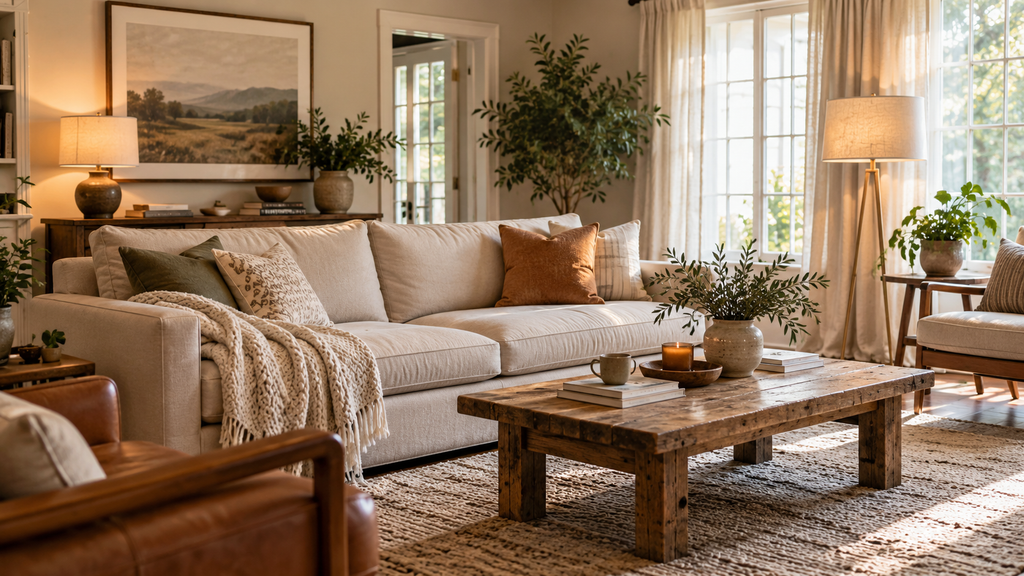
Artwork can give a living room personality and warmth.
Large empty walls can sometimes make a room feel unfinished.
A painting, framed photograph, wall print, or decorative wall piece can create a focal point.
The artwork does not need to be expensive.
Choose something you genuinely enjoy looking at.
The size of the artwork is also important. Very small artwork on a large wall can look lost, while extremely large pieces may dominate the space.
If you have several smaller pictures, you can arrange them together as a gallery wall.
Try to keep the arrangement balanced rather than filling every part of the wall.
Artwork should support the room rather than compete with everything else.
Use Curtains to Soften the Space
Curtains do more than provide privacy.
They can also make a living room feel softer and more complete.
Curtains made from light or medium weight fabric usually work well in living spaces.
Long curtains that reach close to the floor can make windows appear taller and more elegant.
Colors should work with the rest of the room rather than standing out unnecessarily.
Neutral curtains are easy to use, but gentle patterns or colors can also work if the rest of the room is simple.
During the daytime, curtains can frame the windows and make natural light feel softer.
At night, they can make the room feel more private and comfortable.
Create a Comfortable Focal Point
Most welcoming living rooms have something that naturally attracts attention.
This is called a focal point.
A television can be a focal point, but it does not have to be the only one.
A fireplace, artwork, feature wall, large window, bookshelf, or decorative console table can also become a focal point.
Once you choose the main focal point, arrange nearby furniture and decoration so that the room feels visually connected.
Avoid creating too many competing focal points.
When everything tries to attract attention, the room can feel busy.
One strong focal point gives the space a sense of organization.
Pay Attention to Smell
People often focus on what a living room looks like, but smell can be just as important.
A clean and fresh smelling room immediately feels more welcoming.
Regular ventilation is one of the simplest solutions.
Open windows when the weather allows to bring in fresh air.
You can also use mild scented candles, diffusers, or fresh flowers.
Strong artificial fragrances are not always necessary. In fact, very powerful scents may make some guests uncomfortable.
A light, clean scent is usually better.
Cleaning fabrics, rugs, and cushions regularly also helps keep the room fresh.
Make Seating Comfortable
Beautiful furniture is not useful if nobody enjoys sitting on it.
When choosing or arranging seating, think about actual comfort.
Sofas should provide enough support, while chairs should be positioned where they are easy to use.
Cushions can improve comfort, but too many cushions can reduce the amount of usable seating space.
A good living room allows people to sit naturally without needing to move many decorative items first.
It is also useful to have different seating options.
Some people prefer sofas, while others prefer individual chairs.
If space allows, providing a combination can make the room work better for families and guests.
Include a Coffee Table or Side Tables
Tables help make a living room practical.
Guests need somewhere to place drinks, phones, or small items.
A coffee table can serve as the central surface in the seating area.
Side tables are useful next to chairs or at the ends of sofas.
The tables should be easy to reach without blocking movement.
You do not need matching furniture everywhere.
Different pieces can work together if they share similar colors, materials, or proportions.
A functional living room often feels more welcoming because people can use it comfortably without thinking too much about where things should go.
Use Books to Add Warmth
Books can instantly make a room feel more personal.
You can place a few books on a coffee table, shelf, or side table.
Choose books you actually enjoy rather than buying books only for decoration.
A small collection can make the living room feel more lived in and interesting.
Books also encourage quiet activities such as reading and relaxing.
If you have a bookshelf, avoid filling every shelf completely.
Leaving some empty space between books and decorative items can make the display look more balanced.
Add Natural Materials
Natural materials often help create a warm atmosphere.
Wood is one of the most useful materials for living rooms.
A wooden coffee table, shelf, picture frame, or side table can bring warmth into a modern space.
Other natural materials include rattan, bamboo, cotton, linen, wool, clay, and stone.
You do not need to use all of them.
Even one or two natural materials can make the room feel less artificial.
Natural textures also work well with neutral colors and indoor plants.
Make the Room Suitable for Everyday Life
The most welcoming living rooms are designed for real life.
Think about how your household actually uses the space.
Do people watch television there?
Do children play in the room?
Do you read, work, entertain guests, or drink tea there?
Your living room should support those activities.
For example, if you often read, add a comfortable chair and lamp.
If children use the room, include simple storage for toys.
If guests visit regularly, make sure there is enough seating and table space.
Design becomes more successful when it supports daily habits.
Avoid Overdecorating
It is easy to think that adding more decoration will automatically make a room more attractive.
Often, the opposite is true.
Too many decorative objects can make a living room feel busy and difficult to maintain.
Choose fewer items and give them enough space.
This helps each piece feel more intentional.
You can also change decorations during different seasons instead of displaying everything at once.
For example, lighter fabrics can be used during warm weather, while thicker cushions and blankets can be added during colder months.
Simple decoration often feels more peaceful and welcoming.
Keep the Temperature Comfortable
Physical comfort matters just as much as visual design.
A living room that is too hot or too cold will not feel welcoming, even if it looks beautiful.
Use fans, heating, air conditioning, curtains, or ventilation depending on your climate.
Soft rugs and blankets can help during colder months.
During hot weather, lighter fabrics and good airflow can make the room feel more comfortable.
Comfortable temperature encourages people to stay in the room longer.
Create a Sense of Balance
A welcoming living room usually feels balanced.
This does not mean everything has to be perfectly symmetrical.
It means that furniture, colors, and decoration should feel evenly distributed.
For example, if one side of the room contains a large sofa, the opposite side may need a chair, lamp, plant, or another visual element.
If one wall is heavily decorated, other walls can remain simpler.
Balance prevents the room from feeling crowded in one area and empty in another.
Final Thoughts
Making a living room feel more welcoming does not require a large budget or a complete redesign.
Small improvements can have a strong effect.
Start by looking at how the furniture is arranged. Make sure the room encourages conversation and allows people to move easily.
Then focus on comfortable lighting, soft textures, pleasant colors, and practical furniture.
Add personal items, plants, books, artwork, and natural materials to give the room character.
At the same time, avoid filling every surface with decoration.
A welcoming living room should feel clean, comfortable, personal, and easy to use.
The most important thing I have learned from reading about comfortable interior spaces is that good design is not only about appearance. It is about how a room makes people feel.
When guests can walk in, sit comfortably, relax, and feel at home, the living room is doing its job.
Sometimes the simplest changes are the most effective. Moving a chair, adding a lamp, placing a soft rug, opening the curtains, or displaying a few meaningful objects can completely change the atmosphere.
A truly welcoming living room is not necessarily the most expensive or fashionable one. It is the room that feels natural, comfortable, and connected to the people who live there.
SEO Information
Focus Keyword: Simple Ways to Make a Living Room Feel More Welcoming
SEO Title: Simple Ways to Make a Living Room Feel More Welcoming
Meta Description: Discover simple ways to make a living room feel more welcoming with comfortable furniture, warm lighting, soft textures, plants, personal decor, and practical design ideas.
Related Keywords: welcoming living room ideas, cozy living room tips, how to make a living room inviting, comfortable living room design, simple living room decorating ideas, warm living room ideas, living room interior tips