

A balcony may be one of the smallest areas in a home, but it can still become one of the most peaceful. With a little planning, even a narrow balcony can feel comfortable, calm, and welcoming. You do not need expensive furniture or a large collection of decorations. A few thoughtful choices can completely change the atmosphere.
When I think about creating a relaxing balcony space, I focus on comfort first. The space should feel easy to use and pleasant to look at. It should give you a reason to step outside, sit for a while, enjoy fresh air, read a book, drink tea, or simply rest after a busy day.
The best balcony designs are usually simple. Too much furniture can make a small area feel crowded. Too many decorations can also reduce the sense of calm. A relaxing balcony space should have enough useful items to make it comfortable without making it feel full.
Start by Understanding Your Balcony
Before buying anything, spend some time looking at the balcony itself. Notice how much space you have, where sunlight comes from, how much privacy you need, and how the area feels at different times of the day.
Some balconies receive strong sunlight for many hours. Others remain shaded most of the day. Wind can also be stronger on higher floors. These details affect the type of furniture, plants, curtains, and accessories that will work well.
Measure the balcony carefully. Knowing the correct width and length will help you avoid buying furniture that takes up too much space.
It is also useful to think about how you want to use the balcony. You may want a quiet reading corner, a small place for morning tea, a green space filled with plants, or simply a comfortable seat where you can enjoy the evening air.
Once the purpose is clear, it becomes much easier to create a relaxing balcony space.
Choose Comfortable Seating
Comfortable seating is one of the most important parts of a relaxing balcony. The good news is that you do not need a large outdoor sofa.
A simple chair, bench, folding seat, or compact lounge chair can work perfectly. The right option depends on the size of the balcony.
For very small spaces, folding chairs are useful because they can be moved or stored when needed. A narrow bench can also provide good seating without taking up too much floor space.
Add soft cushions to make the seating more comfortable. Choose cushion covers that can be cleaned easily because outdoor areas collect dust faster than indoor rooms.
If your balcony has enough room, two chairs with a small table between them can create a pleasant place for conversation, coffee, or reading.
Try to keep enough walking space around the furniture. A balcony feels more relaxing when movement is easy.
Add a Small Table
A small table can make a balcony much more useful. It gives you a place for a cup of tea, a book, a laptop, a plant, or a small lamp.
You do not need a large table. A compact side table is usually enough for a relaxing balcony space.
Wall mounted tables are another good option for narrow balconies. They can often be folded down when not in use.
A simple wooden or metal table can work well, but choose a material suitable for outdoor conditions. If the balcony is exposed to rain, strong sunlight, or humidity, furniture should be easy to maintain.
Keeping the table mostly clear also helps the balcony feel peaceful.
Bring in Green Plants
Plants can completely change the feeling of a balcony. They add natural color, soften hard surfaces, and create a stronger connection with nature.
You do not need to cover the entire balcony with plants. Even a few healthy plants can make a noticeable difference.
Start with plants that match the light conditions of your balcony. Some plants enjoy strong sunlight, while others prefer shade or indirect light.
Small pots can be placed on a table, shelf, or railing. Larger pots can be positioned in corners. Hanging planters are useful when floor space is limited.
You can also grow herbs such as mint, basil, or coriander if the conditions are suitable. Herbs add greenery and can also be useful in the kitchen.
The main goal is to keep the planting simple and manageable. A relaxing balcony should not create extra stress because of difficult plant care.
Use Vertical Space
Small balconies often have limited floor space, but their walls can provide many useful opportunities.
Vertical shelves, wall planters, hanging pots, and railing planters allow you to decorate without making the walking area crowded.
A simple plant stand can hold several small pots in one area. This keeps the balcony organized while adding visual interest.
You can also use one wall for a decorative feature such as a wooden panel, outdoor artwork, or a small collection of plants.
Using vertical space carefully makes a balcony feel more complete without reducing comfort.
Create Privacy
Privacy can make a major difference in how relaxing a balcony feels.
If nearby buildings or neighboring balconies are very close, you may not feel comfortable spending time outside. Fortunately, there are several simple ways to improve privacy.
Outdoor curtains can create a softer and more private atmosphere. Bamboo screens, decorative panels, tall plants, or railing covers can also help.
Choose a privacy solution that still allows air to move through the space. Completely blocking airflow can make a balcony uncomfortable, especially in warm weather.
Tall plants are especially useful because they provide privacy while keeping the balcony natural and attractive.
The goal is not necessarily to hide the entire balcony. Even partial privacy can make the area feel much more comfortable.
Add Soft Lighting
Lighting has a strong effect on atmosphere. During the evening, harsh lighting can make a balcony feel less relaxing.
Soft lighting usually works better.
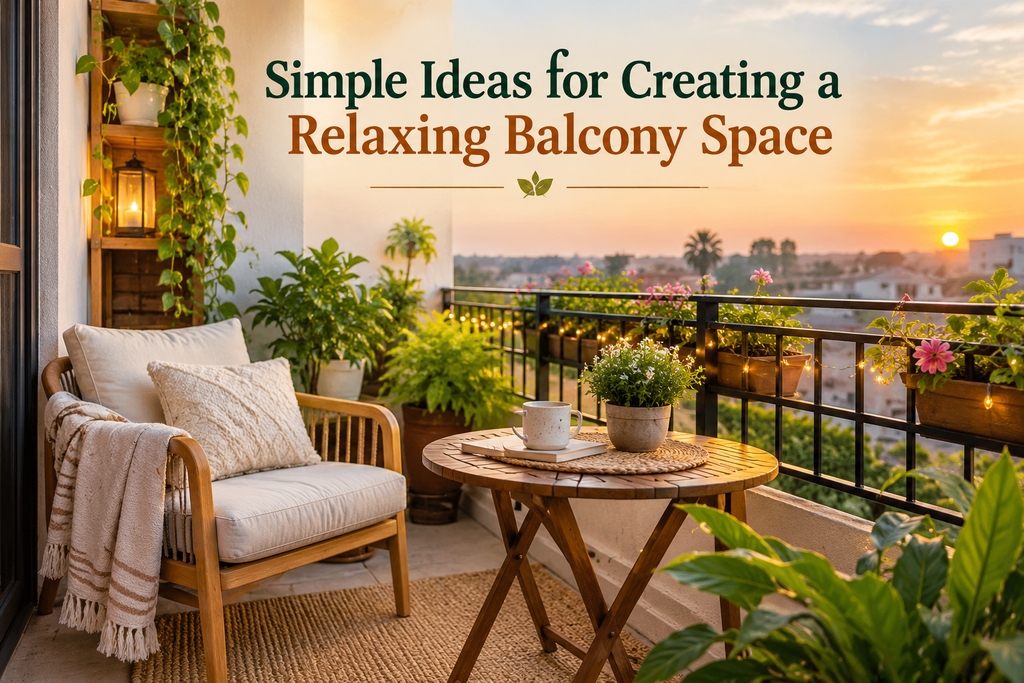
Small outdoor lamps, lanterns, wall lights, or warm string lights can create a comfortable evening setting. Solar powered lights can also be useful if the balcony receives enough sunlight during the day.
Avoid using too many lights. A few carefully placed lights are often enough.
You can place one light near the seating area and another near plants or a wall feature. This creates gentle layers of light instead of one strong source.
Always use lighting that is suitable for outdoor use if the balcony is exposed to weather.
Choose Calm Colors
Color can influence how a space feels.
For a relaxing balcony space, soft and natural colors usually work well. Beige, cream, soft green, light brown, grey, and muted blue can create a peaceful atmosphere.
These colors are easy to combine with plants and wooden furniture.
You can introduce color through cushions, pots, rugs, or small decorative items. Keeping the main color palette simple helps the balcony look organized.
This does not mean everything has to match perfectly. A relaxed space can include different textures and shades. The important thing is to avoid too many competing colors.
Add an Outdoor Rug
An outdoor rug can make a balcony feel warmer and more complete.
It helps define the seating area and makes the floor feel more comfortable. A rug can also cover plain tiles or concrete without requiring permanent changes.
Choose a rug designed for outdoor use because it will be easier to clean and more resistant to moisture.
For a small balcony, select a rug that fits under the main seating area without covering every part of the floor.
Simple patterns and neutral colors usually work well in relaxing spaces.
Remember to clean the rug regularly so dust does not collect underneath.
Keep Decorations Simple
Decorations can make a balcony feel personal, but too many items may make it look cluttered.
Choose a few things that you genuinely enjoy.
A small lantern, one piece of wall art, a decorative pot, a cushion, or a simple tray may be enough.
Natural materials such as wood, clay, cotton, and woven textures often create a softer atmosphere.
Try not to fill every empty corner. Empty space is valuable because it helps the balcony feel open and calm.
When decorating a small area, less is often more effective.
Make the Balcony Easy to Clean
A relaxing balcony should also be easy to maintain.
Dust, leaves, water marks, and outdoor dirt can build up quickly. If the balcony contains too many difficult items, cleaning becomes frustrating.
Choose furniture that can be wiped easily. Keep pots organized so the floor can be cleaned without moving everything.
Sweep the balcony regularly and clean the floor when needed. Wipe tables, chairs, railings, and plant stands to keep the space fresh.
A clean balcony naturally feels more comfortable and inviting.
Think About Shade
Shade can be important if your balcony receives strong sunlight.
Too much direct sun can make the area uncomfortable during the hottest part of the day.
A small outdoor umbrella, roll down shade, bamboo screen, or suitable curtain may help reduce direct sunlight.
The best option depends on the balcony structure and building rules.
Plants can also provide some natural shade, especially when placed near the sides of the seating area.
Good shade makes it easier to enjoy the balcony for longer periods.
Add Something for Personal Comfort
A relaxing balcony should reflect the way you personally like to rest.
For some people, this may mean keeping a few books nearby. Others may enjoy a small tea tray, a comfortable footrest, or a soft blanket for cooler evenings.
You might also enjoy listening to quiet music or simply sitting without any distractions.
The balcony does not need to follow a specific design trend. It only needs to support the activities that help you feel comfortable.
Personal comfort is more important than creating a space that only looks attractive in photographs.
Avoid Overcrowding the Space
One of the most common balcony design mistakes is adding too much.
It is easy to keep buying more plants, cushions, decorations, and furniture. Over time, the balcony can become crowded.
A crowded space is harder to clean, harder to walk through, and often less relaxing.
Try to leave some open floor area. Keep only furniture that you actually use.
If something does not improve comfort or function, consider removing it.
A simple balcony often feels larger and calmer than one filled with unnecessary objects.
Create a Small Daily Routine
A beautiful balcony becomes more enjoyable when you actually use it.
Try creating a simple habit of spending a few minutes there each day.
You might sit outside with your morning tea, water the plants in the evening, read for twenty minutes, or simply enjoy fresh air before going to bed.
Regular use will also help you notice small maintenance problems before they become serious.
For example, you may see that a plant needs water, a cushion needs cleaning, or a piece of furniture needs to be moved away from direct rain.
The balcony becomes part of your home when it is used regularly rather than treated only as decoration.
Adjust the Space With the Seasons
Your balcony may need small changes throughout the year.
During hot weather, you may need extra shade and more frequent plant watering. During cooler months, cushions, blankets, and warmer lighting can make the area feel comfortable.
Rainy weather may require moving certain items indoors or protecting furniture.
Seasonal changes do not need to be expensive. Simple adjustments can keep the balcony useful and relaxing during different parts of the year.
This flexible approach also allows you to refresh the space without completely redesigning it.
Keep Safety in Mind
Comfort is important, but safety should always come first.
Make sure chairs, tables, pots, and decorations are stable. Avoid placing heavy objects where they could fall from the balcony.
Hanging planters and railing containers should be attached securely.
Electrical lights should be suitable for outdoor use and protected from water.
If children or pets use the balcony, additional safety measures may be necessary. Open railings, climbable furniture, and small gaps should be carefully considered.
A peaceful balcony is only truly relaxing when it is also safe.
Final Thoughts
Creating a relaxing balcony space does not require a large budget or professional design experience. The most important thing is to make the area comfortable, simple, and suitable for your daily life.
Start with practical seating, add a small table, introduce a few plants, and improve privacy if needed. Soft lighting, calm colors, and simple decorations can help create a more peaceful atmosphere.
At the same time, avoid overcrowding the balcony. Keep enough open space for movement and choose items that are easy to maintain.
A balcony may be small, but it can still become a valuable part of the home. With thoughtful choices and regular care, it can provide a quiet place where you can sit, relax, enjoy fresh air, and take a short break from everyday routines.


