

A small patio can become one of the most enjoyable parts of a home when it is arranged with comfort in mind. It does not need expensive furniture, a large garden, or complicated decoration. Even a limited outdoor area can feel peaceful, welcoming, and practical when every item has a clear purpose.
When I think about improving a small patio, I find it useful to focus on how the space will actually be used. Some people want a quiet place for morning tea. Others want an outdoor sitting area where family members can talk in the evening. A patio may also become a place for reading, eating, gardening, or simply enjoying fresh air.
The key is to make the space comfortable without filling it with too many things. Good furniture placement, shade, plants, lighting, and small decorative details can completely change the feeling of a patio.
This guide explains how to make a small patio more comfortable while keeping it simple, attractive, and easy to maintain.
Start by Deciding How You Want to Use the Patio
Before buying anything, think about the main purpose of your patio.
A small patio usually works better when it has one clear function instead of trying to serve too many purposes at the same time.
For example, you may want to create a comfortable seating area for two people. In that case, two chairs and a small table may be enough.
If you enjoy outdoor meals, you may prefer a compact dining table with folding chairs.
If relaxation is your priority, a comfortable chair, a few plants, and soft lighting may create exactly the atmosphere you need.
Thinking about the purpose first helps you avoid unnecessary purchases. It also makes the patio feel more organized.
Choose Furniture That Fits the Space
Furniture has a major influence on patio comfort.
Large furniture can quickly make a small patio feel crowded. Instead, choose pieces that match the size of the available area.
Compact chairs, small benches, and round tables usually work well in limited spaces.
A round table can be particularly useful because it does not have sharp corners taking up walking space.
Folding furniture can also be a practical choice. You can open it when needed and store it when you want more room.
Before purchasing patio furniture, measure the space carefully. Leave enough room for people to walk comfortably between chairs, tables, doors, and walls.
Comfort should always be more important than filling every empty corner.
Add Comfortable Outdoor Cushions
Outdoor furniture becomes much more inviting when cushions are added.
Even a basic chair can feel comfortable with a supportive seat cushion and a soft back cushion.
Choose cushions made from materials designed for outdoor conditions. These materials are usually easier to clean and better able to handle sunlight and moisture.
You can also use cushions to introduce gentle color into the patio.
Neutral colors create a calm atmosphere, while brighter colors can make the space feel more cheerful.
Try not to use too many different colors in a small area. A simple color combination often creates a more balanced appearance.
Create Shade for Hot Days
Shade is one of the most important parts of patio comfort.
Direct sunlight can make an outdoor area uncomfortable, especially during warm afternoons.
A patio umbrella is one of the easiest solutions. It can provide shade without requiring major changes to the structure of the home.
A fabric canopy can also work well if the patio has suitable support.
Another option is to place taller plants around the seating area. While plants may not provide complete shade, they can help create a cooler and more relaxing environment.
When arranging shade, consider the direction of the sun during the hours when you use the patio most often.
Use Plants to Make the Patio Feel Relaxing
Plants can make even the smallest patio feel more pleasant.
Greenery softens hard surfaces such as concrete, brick, and tile. It can also make the area feel connected to nature.
For small patios, containers are usually the easiest option.
You can place pots along walls, beside chairs, or near the entrance.
Choose plants according to the amount of sunlight the patio receives. Some plants prefer strong sunlight, while others grow better in partial shade.
Herbs can also be useful patio plants. Mint, basil, rosemary, and similar herbs can add both greenery and practical value.
Avoid placing too many large pots on the floor because they can reduce walking space.
Consider Vertical Gardening
When floor space is limited, walls can become useful gardening areas.
Vertical gardening is a smart way to introduce plants without making the patio crowded.
Wall mounted planters, shelves, hanging baskets, and plant stands can help you use vertical space effectively.
Climbing plants can also create an attractive natural background.
A vertical garden may also provide additional privacy, especially when the patio is close to neighboring properties.
Keep the arrangement simple so plants do not completely cover the area.
The goal is to create a fresh atmosphere while maintaining an open feeling.
Add Soft Outdoor Lighting
Lighting can completely change how a patio feels in the evening.
Bright lights are not always necessary. In fact, softer lighting often creates a more comfortable outdoor atmosphere.
Small wall lights, solar lights, lanterns, or string lights can provide gentle illumination.
Place lighting near seating areas, walkways, and entrances where visibility is important.
Warm lighting usually feels more relaxing than extremely bright lighting.
Solar lights can be particularly useful because they do not require complicated wiring.
Good lighting allows you to enjoy the patio after sunset and makes the space feel like an extension of the home.
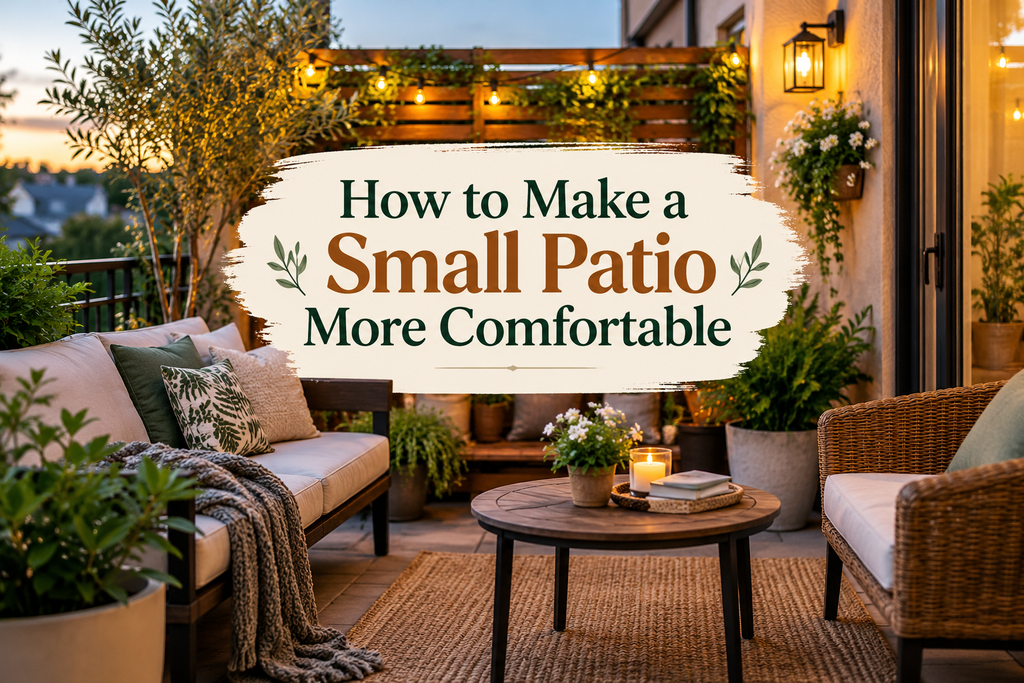
Add an Outdoor Rug
An outdoor rug can make a patio seating area feel warmer and more complete.
It visually defines the space and can make simple furniture appear more connected.
Choose a rug that is suitable for outdoor use and easy to clean.
The rug should fit comfortably under the main furniture without covering the entire patio.
Simple patterns usually work well in small spaces because they add interest without becoming overwhelming.
An outdoor rug can also make hard patio flooring feel slightly softer underfoot.
Create Some Privacy
Privacy can make a patio feel much more comfortable.
If the space is visible from neighboring homes or a nearby street, you may not feel completely relaxed while using it.
There are several simple ways to improve privacy.
Tall potted plants can create a natural screen.
A wooden privacy panel can also provide separation without completely enclosing the space.
Outdoor curtains may be suitable for covered patios.
The aim should be to create privacy while still allowing light and air to move through the area.
A patio that feels private often becomes a space that people use more frequently.
Keep the Layout Open
One common mistake with small patios is adding too many objects.
Furniture, plants, decorations, rugs, storage boxes, and lighting can quickly make a limited area feel crowded.
Try to keep the center of the patio relatively open.
Place furniture close to walls or corners when possible.
Leave a comfortable path between the entrance and seating area.
An open layout makes the patio look larger and also makes it easier to move around.
Sometimes removing one unnecessary chair or large planter can improve the space more than adding another decorative item.
Include a Small Table
A table adds practical value to almost any patio.
You may use it for drinks, books, snacks, plants, or outdoor meals.
For a very small patio, choose a side table or compact round table.
Nesting tables can also be useful because one table can be stored underneath another when it is not needed.
A table should be easy to reach from the seating area without blocking movement.
Simple furniture usually works better than heavy decorative pieces in small outdoor areas.
Use Storage Carefully
Patios often need some type of storage for cushions, gardening tools, or cleaning supplies.
However, large storage containers can take up valuable space.
Look for furniture that offers more than one function.
For example, a bench with storage inside can provide seating and keep outdoor items organized.
A small weather resistant cabinet placed against a wall can also work well.
Keeping items stored properly helps the patio remain clean and comfortable.
Visible clutter can make even a well decorated patio feel smaller than it really is.
Choose Simple Decorations
Decorative items can add personality to a patio, but they should be used carefully.
A few well chosen pieces are usually better than many small objects.
You might add a ceramic planter, a lantern, a simple wall decoration, or a small outdoor sculpture.
Try to choose decorations that suit the colors and materials already present in the patio.
Natural materials such as wood, clay, stone, and woven textures often work beautifully in outdoor spaces.
Simple decoration helps the patio feel finished without making it visually busy.
Keep the Patio Clean
Comfort is not only about furniture and decoration.
A clean patio is naturally more pleasant to use.
Dust, leaves, soil, and outdoor debris can quickly collect on furniture and flooring.
Regular sweeping can keep the area looking tidy.
Tables and chairs should also be wiped when necessary.
Outdoor cushions may need occasional cleaning depending on weather conditions.
Plant leaves and dry flowers should be removed so containers continue to look healthy.
A small patio is usually easy to maintain when cleaning is done regularly instead of waiting until the area becomes very dirty.
Think About Weather Protection
Outdoor spaces are constantly exposed to weather.
Strong sunlight, rain, dust, and wind can affect furniture and decorations.
Choose outdoor materials whenever possible.
Wooden furniture may require protective treatment from time to time.
Metal furniture should be checked for signs of rust.
Cushions can be stored indoors or inside a storage bench during heavy rain.
Lightweight objects should also be secured if strong winds are common in your area.
Taking care of outdoor items helps them remain attractive for longer.
Add Personal Comfort
The final step is to add small details that make the patio enjoyable for you.
This could be a favorite chair for reading, a small table for tea, a collection of herbs, or a comfortable cushion.
Some people enjoy listening to quiet music outdoors. Others prefer the sound of birds and plants moving in the breeze.
Your patio does not need to look like a professional design project.
It simply needs to support the activities that help you relax.
Personal comfort is what transforms a small outdoor area into a space that feels meaningful.
Final Thoughts
Learning how to make a small patio more comfortable is mainly about using space wisely.
You do not need a large budget or a large outdoor area. Comfortable furniture, simple shade, a few healthy plants, gentle lighting, and an organized layout can make a noticeable difference.
Start with the basic purpose of the patio and select only the items that support that purpose. Avoid filling every corner. Leave enough open space for comfortable movement and allow the patio to feel fresh rather than crowded.
Plants can bring life to the area, while cushions and outdoor rugs add softness. Lighting can make the patio useful in the evening, and privacy features can create a greater sense of relaxation.
The most comfortable patios are often the simplest ones. They provide a place where you can sit, enjoy fresh air, have a drink, read a book, or spend quiet time outdoors.
With thoughtful planning and regular care, even a very small patio can become a comfortable and welcoming part of your home.


