Wooden furniture has a natural beauty that can make any room feel warm, comfortable, and inviting. A solid wooden table, cabinet, chair, bed, or bookshelf can last for many years when it is cared for properly. However, wood is also sensitive to dust, moisture, sunlight, heat, and harsh cleaning products. Without regular care, even good quality wooden furniture can lose its shine, develop stains, or become dry and damaged.
Learning how to clean and care for wooden furniture is not difficult. In fact, a simple routine is often more effective than using expensive products. The main idea is to remove dust gently, clean spills quickly, protect the surface from damage, and use suitable products only when necessary.
After reading different furniture care guides and understanding how wood reacts to everyday conditions, I found that consistent care matters more than complicated cleaning methods. With a few basic habits, wooden furniture can remain attractive and useful for a long time.
Why Wooden Furniture Needs Regular Care
Wood is a natural material. It can react to changes in temperature, moisture, and sunlight. If wooden furniture is left dusty for long periods, fine particles can build up and make the surface look dull. Dust can also create tiny scratches when objects are moved across the furniture.
Moisture is another common problem. Water left on a wooden surface can sometimes create white marks, dark stains, swelling, or damage to the finish. Excessive dryness can also cause certain types of wood to shrink or develop small cracks.
Regular wooden furniture care helps protect the finish and reduces the chance of permanent damage. It also makes daily cleaning much easier because dirt and stains do not have enough time to build up.
Start With Regular Dusting
Dusting is one of the simplest and most important steps in wooden furniture cleaning. Even when furniture looks clean, a thin layer of dust may still be present.
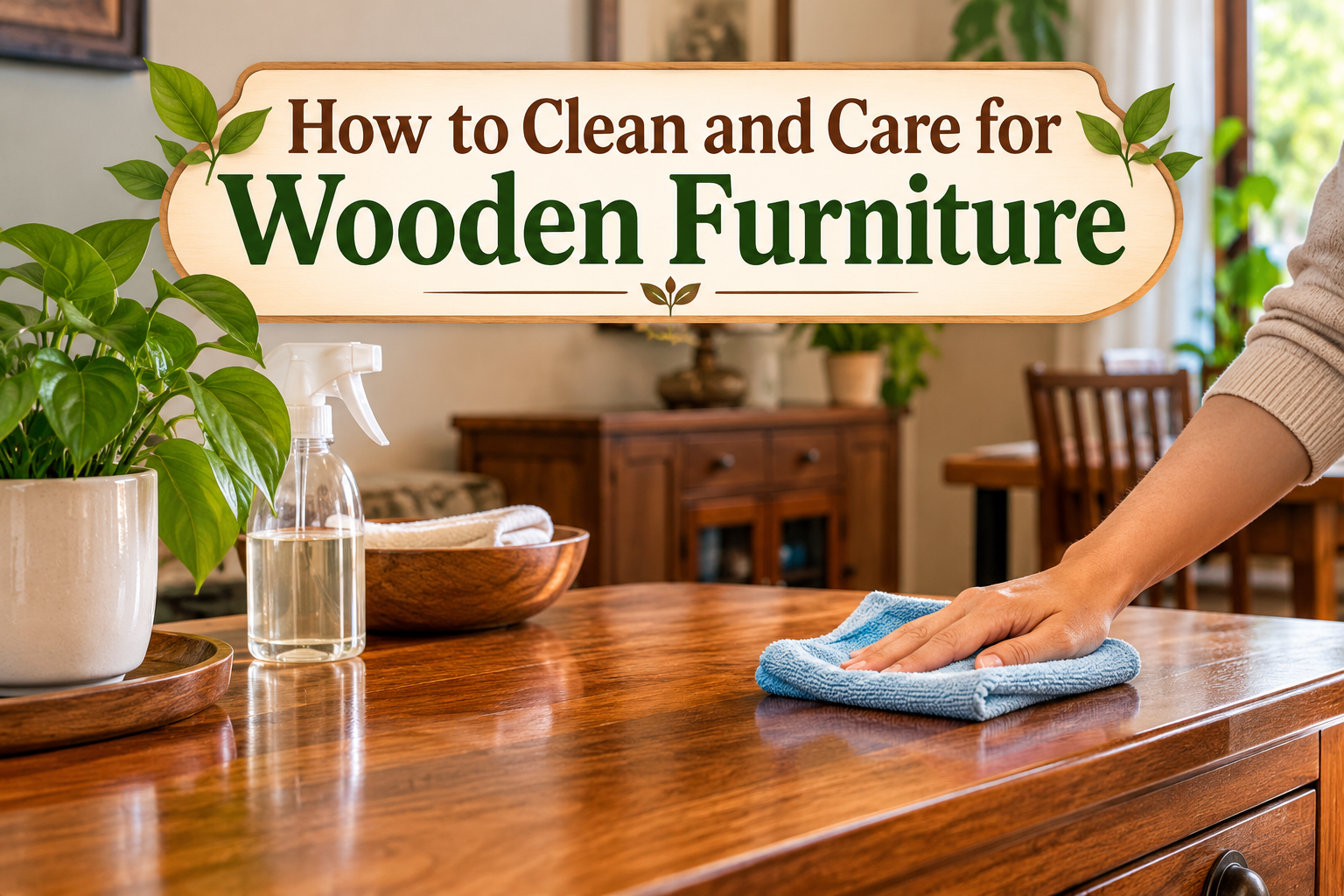
Use a soft microfiber cloth to remove dust from the surface. Microfiber works well because it collects dust rather than simply pushing it around. A clean cotton cloth can also be used.
Wipe gently in the direction of the wood grain when possible. There is usually no need to press hard.
For carved furniture, corners, decorative edges, and narrow spaces, use a soft brush or clean cloth wrapped around your finger. A small soft paintbrush can also help remove dust from detailed wooden designs.
Try to dust wooden furniture at least once a week, especially in rooms where windows remain open or where dust enters easily.
Avoid Using Too Much Water
One of the biggest mistakes people make when cleaning wooden furniture is using too much water.
Wood and excessive moisture do not work well together. A wet cloth can allow water to reach small openings in the finish. Over time, this may cause swelling, discoloration, or damage.
When deeper cleaning is needed, use a slightly damp cloth instead of a soaking wet cloth.
Dip the cloth in clean water and squeeze it thoroughly until it feels only slightly moist. Wipe the furniture gently and immediately dry the surface with another soft cloth.
Never leave wooden furniture wet after cleaning.
Use a Mild Cleaning Solution When Necessary
Sometimes dusting alone is not enough. Fingerprints, food marks, grease, or general dirt may require a mild cleaning solution.
Mix a small amount of gentle dish soap with warm water. Only a few drops of soap are usually enough.
Dip a soft cloth into the solution and squeeze out almost all of the water. Test the solution on a small hidden part of the furniture first. If there is no change in color or finish, continue cleaning the visible surface.
Work on small areas at a time.
After cleaning, wipe the surface with another slightly damp cloth to remove any soap residue. Then dry the wood completely with a soft towel.
Strong household cleaners should usually be avoided unless the furniture manufacturer specifically recommends them.
Clean Spills Immediately
Quick action can prevent many wooden furniture stains.
If water, tea, coffee, juice, or another liquid spills on wooden furniture, use a soft absorbent cloth to remove it immediately.
Do not spread the liquid across the surface. Instead, gently absorb it by pressing the cloth over the spill.
Once most of the liquid has been removed, wipe the area carefully and dry it completely.
The longer a liquid stays on wood, the greater the chance that it can affect the finish or leave a stain.
This simple habit can protect wooden tables, desks, and cabinets from unnecessary damage.
Protect Furniture From Direct Sunlight
Sunlight can slowly change the appearance of wooden furniture.
Strong sunlight entering through a window may cause certain types of wood or finishes to fade. In some cases, one part of the furniture may become lighter than another because only one section receives direct sunlight.
Try to position valuable wooden furniture away from strong direct sunlight whenever possible.
Curtains, blinds, or window shades can also reduce exposure during the brightest hours of the day.
If decorative objects are kept on a wooden surface, move them occasionally. This can help the surface age more evenly instead of developing noticeably darker or lighter areas.
Keep Wooden Furniture Away From Heat
Excessive heat can also affect wood.
Avoid placing wooden furniture directly beside heaters, fireplaces, radiators, or other strong heat sources.
Very dry and hot conditions may cause wood to lose moisture. Depending on the type of furniture, this can lead to shrinking, cracking, or changes in joints.
A stable indoor environment is generally better for wooden furniture than frequent changes between very humid and very dry conditions.
There is no need to create perfect indoor conditions. Simply avoiding extreme heat and moisture can make a noticeable difference.

Use Coasters and Mats on Wooden Tables
Wooden tables experience more daily use than many other pieces of furniture.
Hot cups, cold glasses, food plates, and serving dishes can leave marks on the surface if they are placed directly on the wood.
Use coasters under drinks and mats under hot dishes.
Placemats can also protect dining tables from scratches, spills, and food stains.
When using decorative items such as flower pots, lamps, or ornaments, consider placing soft protective pads underneath them.
These small protections reduce direct contact between the furniture surface and objects that may create marks.
Be Careful When Moving Objects
Dragging objects across wooden furniture can create scratches.
Instead of sliding a lamp, vase, computer, decoration, or storage box across the surface, lift it and place it in the new position.
This is especially important for objects with rough bases.
Soft felt pads can be added under decorative objects to reduce the risk of scratching.
The same principle applies to wooden floors and furniture legs. Felt pads under chair and table legs can help protect both the furniture and the flooring.
Remove Sticky Marks Gently
Sticky residue can sometimes appear on wooden furniture because of tape, labels, food, or spilled drinks.
Avoid scraping the mark with a knife or another sharp object.
Start by using a slightly damp cloth with mild soapy water. Rub the area gently using small circular movements.
If the residue does not come off easily, stop rather than using excessive force. Different wood finishes react differently to cleaning products, so stronger products should always be tested carefully on a hidden area first.
Gentle cleaning may take a little longer, but it reduces the risk of damaging the finish.
Polish Wooden Furniture Only When Needed
Furniture polish can improve the appearance of some wooden surfaces, but it should not be used excessively.
Too much polish can create a sticky layer that attracts dust. Some products may also leave a cloudy appearance when used repeatedly.
Before applying any polish, check whether it is suitable for the type of finish on your furniture.
Apply a small amount to a soft cloth rather than pouring the product directly onto the wood.
Spread it evenly and buff the surface gently with a clean cloth.
For many modern wooden furniture pieces, regular dusting and occasional gentle cleaning may be enough.
Understand the Difference Between Cleaning and Refinishing
Cleaning removes surface dust, dirt, and light marks. Refinishing is different.
If wooden furniture has deep scratches, peeling varnish, severe water damage, or badly faded areas, ordinary cleaning may not restore it.
Refinishing may involve sanding, staining, sealing, or applying a new protective finish.
These jobs require more care because incorrect sanding or chemical use can permanently change the furniture.
Valuable, antique, or expensive wooden furniture may be better handled by a professional restorer when serious repair is needed.
Check Furniture Joints Occasionally
Wooden furniture care is not only about cleaning the surface.
Chairs, tables, cabinets, and beds may develop loose joints after years of use. Check them occasionally.
If a chair feels unstable or a table starts moving when touched, inspect the screws, bolts, or joints before the problem becomes worse.
Tightening loose hardware at the right time may prevent further damage.
However, avoid forcing screws too tightly because this can damage the wood.
Routine inspection can help wooden furniture remain safe and strong.
Keep Furniture Dry in Humid Areas
High humidity can sometimes affect wooden furniture, especially in poorly ventilated rooms.
Allow fresh air to circulate whenever practical. Avoid placing wooden furniture directly against damp walls.
If you notice moisture collecting around a room, improve ventilation and check for leaks or other sources of dampness.
Wooden furniture should not remain in contact with wet floors or walls for long periods.
Controlling moisture helps protect both the furniture and the indoor environment.
Create a Simple Wooden Furniture Care Routine
A simple routine makes furniture care easier.
Once a week, remove dust with a soft microfiber cloth.
Whenever something spills, clean it immediately.
Every few weeks, inspect frequently used furniture for stains, sticky areas, loose parts, or scratches.
When deeper cleaning is necessary, use a slightly damp cloth with mild soap and dry the surface immediately.
A few times each year, inspect the furniture carefully and decide whether polishing, repair, or professional attention is needed.
The goal is not to clean wooden furniture constantly. The goal is to prevent small problems from turning into permanent damage.
Common Mistakes to Avoid
Several cleaning habits can shorten the life of wooden furniture.
Avoid soaking the surface with water.
Do not use rough sponges or abrasive cleaning pads.
Avoid placing very hot items directly on wooden surfaces.
Do not allow spills to remain for long periods.
Avoid dragging heavy objects across furniture.
Do not use unknown chemicals without testing them first.
Avoid excessive polishing.
Do not place good quality wooden furniture directly beside strong heat sources.
Preventing damage is usually much easier than repairing it.
Final Thoughts
Knowing how to clean and care for wooden furniture can help preserve its natural appearance for many years. Most wooden furniture does not require complicated maintenance. Regular dusting, careful cleaning, quick spill removal, protection from heat and sunlight, and gentle everyday use can make a significant difference.
The most important lesson is to treat wood carefully. Use as little moisture as possible, avoid harsh cleaning products, and protect the surface from scratches and stains.
A wooden table or cabinet often becomes part of a home for many years. Some pieces may even be passed from one generation to another. Giving wooden furniture a little regular attention helps maintain its beauty, strength, and usefulness.
By following a simple wooden furniture cleaning routine, you can keep your furniture looking fresh without spending a large amount of time or money. Good care is mainly about consistency. Small habits practiced regularly are often enough to keep wooden furniture clean, attractive, and well protected.